Cesare Beccaria Quotes
For every crime that comes before him, a judge is required to complete a perfect syllogism in which the major premise must be the general law; the minor, the action that conforms or does not conform to the law; and the conclusion, acquittal or punishment. If the judge were constrained, or if he desired to frame even a single additional syllogism, the door would thereby be opened to uncertainty.
Beccaria, Cesare. On Crimes and Punishments. Translated by Aaron Thomas and Jeremy Parzen, University of Toronto Press, 2008, p. 14.


This is one of the earliest American articulation of the 12 man jury.

This is the most formalized and sophisticated compendium of laws of the so-called “barbaric peoples” of Europe. The compilation was in many ways a documentation of the traditional laws of the Visigoths that had evolved over hundreds of years.


Judges were commonly granting injunctions against unions that were boycotting companies, which was then against the law. However, no judge had ever given an injunction against a company to stop them from boycotting individual workers who were known union organizers. Taft, who had a distinguished career as a Judge earlier in his career shocked the business world and delighted organized labor. Considered politically, a Republican running for President publicly advocated a new right and protection for labor organizing, when his party was supposed to protect companies against Labor. Taft however, was not an ideologue, but was a very fair man, and to him this particular issue was simple. Veteran politicians thought that he should have ducked the question, as he would offend much of the Republican base, but he was used to that being the number 2 man in Theodore Roosevelt’s Administration.
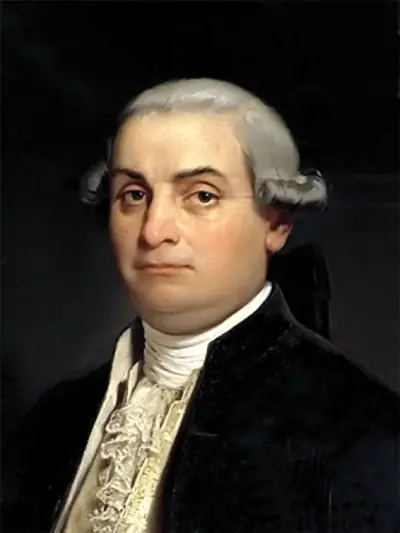
Cesare Bonesana di Beccaria, Marquis of Gualdrasco and Villareggio was an Italian criminologist, jurist, philosopher, and politician, who is widely considered one of the greatest thinkers of the Age of Enlightenment. He is well remembered for his treatise On Crimes and Punishments (1764), which condemned torture and the death penalty, and was a founding work in the field of penology and the Classical School of criminology. Beccaria is considered the father of modern criminal law and the father of criminal justice.
