Le Quy Don Quotes
For every amount the state collected [in taxes], the mandarin collectors took twice as much for themselves.
The Trinh controlled North Vietnam while the Nguyen Lords controlled the South—the origin of the division of Vietnam. The Le Kings had little authority anywhere.
Le Quy Don, 1726-1784, Vietnamese Historian, Description of tax collection in south of Vietnam under the 16th and 17th century Nguyen
Sourced by: Eigen's Political and Historical Quotations


When his wife Benizir Bhutto was prime minister, there was a perception of many Pakistanis that he was getting 10% graft on all government construction, development and purchases. After his wife was assassinated, he was elected Prime Minister, and the notorious nickname stuck even then.

It was very common to have tax collectors take a percentage of their collections as a commission and to be able to appoint sub tax collectors who also took commissions. On top of that, most tax collectors underreported the amount that they collected and pocketed the difference. At the time, Spain was worse than most Christian nations.


In many countries throughout the world, corruption is rampant and any contractor to the government has to pay and often offers to pay the appropriate government officials. In the most corrupt countries like Nigeria, corruption is rife in all levels of government but is technically illegal. While in Saudi Arabia, the government has institutionalized the bribery and corruption but limited the amount to 6 percent. Corruption of this type is not only existent on government contracts but often operates for private money where government approval must be obtained. World Bank contracts for example are notorious for the percentage that must be paid to government officials despite the fact that the World Bank officially claims to be against corruption.
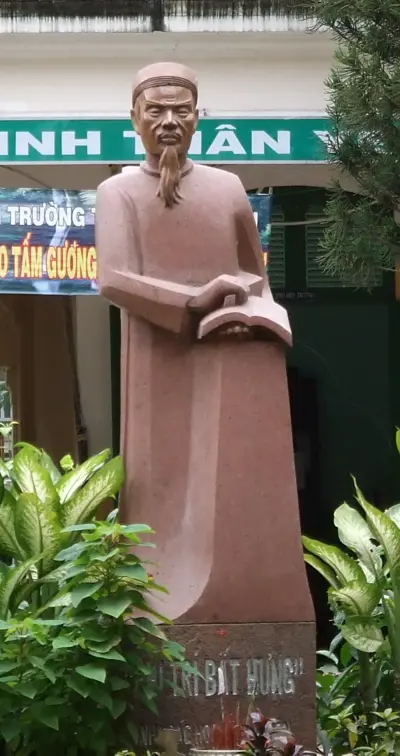
Lê Quý Đôn (黎貴惇; 1726–1784) was an 18th-century Vietnamese poet, encyclopedist, and government official. His pseudonym was Quế-Đường. He was a native of Duyen Ha village in present-day Thái Bình Province. He is considered one of the most outstanding and prolific Vietnamese savants of the early modern period.
