Umberto Eco Quotes
For centuries, as pope and emperor tore each other apart in their quarrels over power, the excluded went on living on the fringe, like lepers, of whom true lepers are only the illustration ordained by God to make us understand this wondrous parable, so that in saying 'lepers' we would understand 'outcast, poor, simple, excluded, uprooted from the countryside, humiliated in the cities.' But we did not understand; the mystery of leprosy has continued to haunt us because we have not recognized the nature of the sign.
Eco, Umberto. The Name of the Rose. Harcourt Brace Jovanovich, 1983, p. 202.


The phrase “submerged tenth” was ironically used earlier {595222} by a great humanitarian, William Booth, 1829-1912, British Cleric & Founder of The Salvation Army to refer to the poor and the underclass of England. The Salvation Army focused on helping the submerged tenth; the Eugenics Record Office, sterilizing them. The Eugenics Record Office was an activist organization advocating the forced sterilization of those people who they deemed to be inferior from a hereditary point of view. Most Americans are today shocked to find that this organization and its ideas were so influential that more than 30 states had passed similar laws. Only California and Virginia were very zealous in carrying them out however. By 1935, 20,000 forced sterilizations had been carried out in the United States. The Supreme Court at the time even found such laws Constitutional. See {603680}.


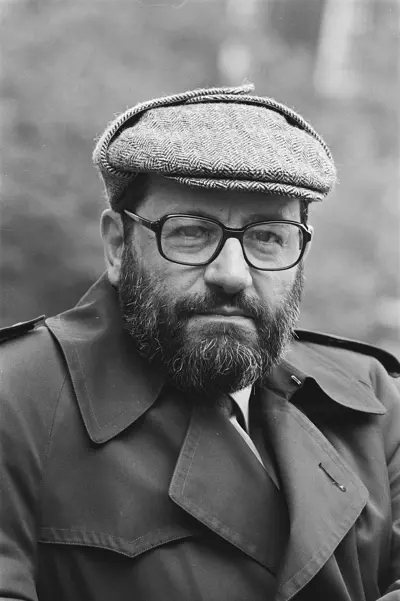
Umberto Eco OMRI was an Italian medievalist, philosopher, semiotician, cultural critic, political and social commentator, and novelist. In English, he is best known for his popular 1980 novel The Name of the Rose, a historical mystery combining semiotics in fiction with biblical analysis, medieval studies, and literary theory, and Foucault's Pendulum, his 1988 novel which touches on similar themes.
