Joseph Lancaster Quotes
Female schools might be comprised in the list of those worthy the public patronage, with great propriety.
Lancaster, Joseph. Improvements in Education, as it Respects the Industrious Classes of the Community. 3rd ed., Darton and Harvey, 1805, p. 17.

There are two things that make this quotation interesting, First it tells us about the educational gender discrimination in early Massachusetts. But not his phrase “light soon broke in”. He obviously saw the lack of education for girls as undesirable and unenlightened. But the fact that he had this attitude and would express is so readily in 1857 tells us that, at least in the Northeast girls’ education was assumed by many as part of civilized society.


The phrase “national care and expense” was one that was seen as precedent for those advocating federal aid to education and a strong Department of Education. However, the majority of Adams contemporaries saw education, even public education, as a local matter. The word “education” or “school” never appeared in the Constitution. Adams was well before his time on this point.


The organization was initially called the National Negro Committee. The following year the name was changed to the National Association for the Advancement of Colored People. Note that at the time, even for Blacks, the concept of desegregation was so far from reality that their efforts were simply to have segregated schools with the same resources as the white children had. The “separate but equal” doctrine was the method of the segregationists.
Public schools were a radical idea at the time, but public schools for girls is astounding, especially coming from the clergy. This Cahier was the consensus of the Clergy of Blois in 1789. There were cahiers of several provinces of France—some by the clergy, some by the nobles. What is fascinating is the emergence of many of the pre-Revolutionary French concepts. The example of the American revolution and its principles was known throughout the educated classes of France.


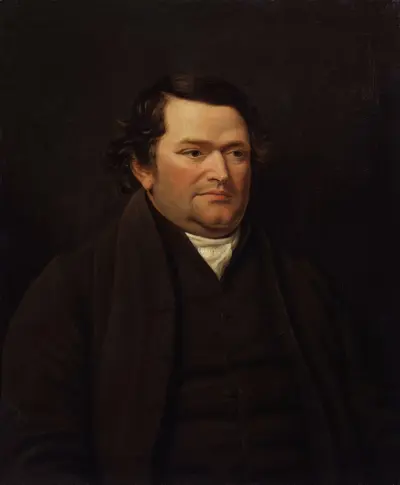
Joseph Lancaster was an English Quaker and public education innovator. He originated the saying "a place for everything and everything in its place". The height of popularity of his system came in the first decades of the 19th century.
