Wayne Rogers Quotes
Everything that is large and institutional should be distrusted, even though it may be the best around. The Internal Revenue Service doesn't trust me, so why should I trust them? It's a quid pro quo arrangement.


See Charles James Fox, John Milton, Grover Cleveland, George Mason, Henry Clay, Benjamin Disraeli and Woodrow Wilson for similar expressions of this idea.

Berg, one of the early OSS recruits, was a brilliant loner and somewhat paranoid. His early modus operandi was to work with no partners, never as part of a team, and only report to the head of the agency and a deputy or two and otherwise never reveal where he was or how he did things. Berg however was brilliant and multilingual, and even was able to have discussions with the best Physicist left in Germany--Nobel Prize winner Werner Heisenberg. Berg determined that Heisenberg was not working on an atomic bomb with some clever technical discussions and listening to some of Heisenberg's presentations. Therefore, following his orders, he did not assassinate the German Scientist whuch he was prepared to do. Other than OSS officials, many in America did not believe that the Germans would not have their best scientist working on Nuclear Energy. However, Hitler was biased against what he called "Jewish Sceince" and bet on jet planes. After the war, The CIA reorganized the American espionage effort and there was no place for Berg’s old school style.


Observing the similarity between the American and Russian disarmament proposals:


There are many who would disagree with Presti’s description, while many others have this as a chief complaint. The agency tends to change from administration to administration as to its policies and collection methods. In the decades since this criticism, the agency has changed a good deal. However, there are great differences between IRS practices in different parts of the country, some of which are better than the others. One of the major problems of the IRS is the conflict between collecting taxes that should have been paid and were not and ruining the business or individual that committed the offense by taking current working capital. Congress has NEVER weighed in on this question preferring to let the Civil Servants take the heat.


This is one of the major reasons that the relations between police and the communities they are policing is so important. Also, the style and courtesy that the IRS tax collectors exhibit is very important.

In bureaucracy, as in most other aspects of politics, it is not a serious problem if you are wrong as long as most or many others are. However, if your are alone, you had better be right.
Gelb was referring to the Cuban Missile Crisis in 1963. The Russians had installed ICBMs in Cuba and more were coming by sea. WWIII could have started with a misstep by the United States or the Soviet Union. President rejected the advice of some hawks to attack and/or invade Cuba and be ready to attack Russia with nuclear weapons. Instead, he authorized a naval blockade of all ships and planes going in or out of Cuba. There were some negotiations with the Russians, and in a few days, the Russians dismantled and removed the missiles from Cuba and we lifted the naval blockade. The perception was that Kennedy faced down the Russians who capitulated when faced with firmness and force. Actually, Kennedy gave the Russians much more. He agreed to remove the American ICBM Jupiter missiles from Turkey. But if that were known in America, the right wing would criticize Kennedy mercilessly for appeasing and capitulation to the Russians. The Russians agreed to keep it secret, and the Executive Branch classified it top secret and kept the entire deal from the public. 50 years later, Gelb, one of the few people in the government then who knew the entire deal, wrote this article pointing out that there was a serious danger to what we did to make that deal a secret. Many hawks took the Cuban Missile Crisis as proof that the Russians would back down when faced with a fait accompli and would not retaliate. They then formulated much American foreign and military policy on the assumption that the Russians will capitulate when faced with our tough unilateral terms. The reality of course was just the opposite. The Russians would only agree to a peaceful solution if we withdrew all our missiles that were threatening them and end the naval blockade of Cuba. The Russians got us to remove our missiles for the relatively cheap price of removing from Cuba just a few missiles that they had just installed. Kennedy looked like the strong hero who stood up to the Russians while in reality, he and our military and state department lost a diplomatic contest of sorts. Kennedy apologists argue that because America had developed longer range ICBMs, the Jupiter Missiles in Turkey were not that important, and Kennedy really gave up nothing of value. The Kennedy team clearly didn’t want to argue that point in a public debate, and chose secrecy where the enemy clearly knew the whole story, but our allies, our civilians, our politicians and even most of our military were in the dark.
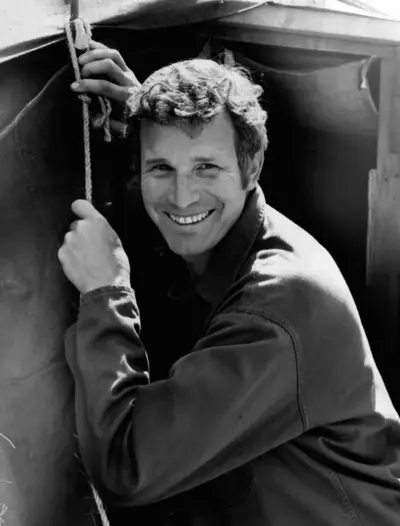
William Wayne McMillan Rogers III was an American actor, known for playing the role of Captain "Trapper" John McIntyre in the CBS television series M*A*S*H and as Dr. Charley Michaels on House Calls (1979-1982).
