Priyamvada Natarajan Quotes
Everyone acknowledges that there is a political part to tenure, but no one likes to admit it.
Natarajan, Priyamvada. Interview. YaleNews, Yale University, 2014.


While this quotation seems bizarre to us in modern America, there was some historical truth of this in Europe. Before political parties, the Church was the dominant political force, and no professor could be appointed whose views did not coincide with those of the church. Later political parties in many parts of Europe did concern themselves with the views of professors. However, America with its strong tradition of private universities built state public universities in the mold of Harvard, Yale, Brown, Columbia and Princeton where national and local politics were not major factors of appointment and retention of professors. Today it is very rare when a state legislature or government allows politics to become a factor in appointments of professors. The University of Virginia is the most dramatic exception where governors of the state serve for 2 years and when a new governor takes office, he replaces all the trustees and the University. These then have allowed politics to become a major factor in some dramatic cases. And the Federal Universities—the military service academies—do allow political views to encroach on the faculty appointment and retention decisions. However, this is rarely partisan in the sense of Democrat or Republican. But Professors who hold views contrary to BOTH political parties are rare.


Then Clarence Thomas replaced Thurgood Marshall on the Supreme Court, there appeared to be a majority of the court that would overturn Roe v. Wade and a woman’s right to an abortion. However it was an election year and the Chief Justice, a Republican, was concerned that if Roe was overturned the electorate might take it out on the Republicans, whose Solicitor Generals had fought to overturn Roe, at the polls. He therefore postponed the hearing of a Pennsylvania case, and then tried to postpone it again till after the election. Blackmun’s memo caused a majority of the court to vote to hear the case with no additional delay. Ironically, by a single vote, Roe was upheld.

In America, the best attorneys have stayed in private practice where they could make much more money than government service or become professors and scholars of law. In either case, most have a track record that would make Senate confirmation difficult even if they wanted to be Federal Judges. A few like Abraham Lincoln went into politics. The Supreme Court is somewhat of an exception because of the power it wields, but even then many great attorneys have not been so inclined. Federal judges have usually been above average as attorneys, but not among the greatest.


In 1908 William Randolph Hurst made public a series of letters showing that the senator was being paid large sums by the Standard Oil company and was also being instructed on pending legislation. See John Archbold. The senator was pressured out of public life:
During the George W, Bush Administration, key politicians, including the vice president pressured and influenced the CIA and to produce intelligence reports that justified their policy of invading Iraq. After the invasion, the weapons of mass destruction were shown to have never existed even though they were the official causes belli (cause of the war).


This quotation illustrates a political phenomenon that used to be common in American politics—the spoils system where government activities, positions, contracts and grants were awarded to the supporters of the winning party and not to the opponents. In modern times government contracts were supposed to have been awarded on the basis of qualifications and price and not conditioned on political support. In this rare quotation, the secretary admitted to violating his own Department’s regulations and using politics as a criteria where existing laws prohibited that.
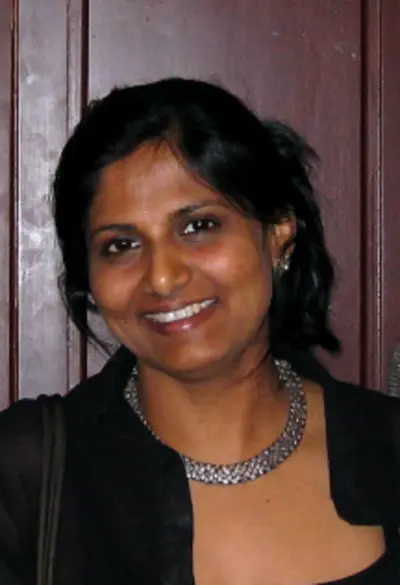
Priyamvada (Priya) Natarajan is a professor in the departments of Astronomy and Physics at Yale University. She is noted for her work in mapping dark matter and dark energy, particularly with her work in gravitational lensing, and in models describing the assembly and accretion histories of supermassive black holes. She authored the book Mapping the Heavens: The Radical Scientific Ideas That Reveal the Cosmos.
