Friedrich Nietzsche Quotes
Every virtue has its privilege: for example, that of contributing its own little bundle of wood to the funeral pyre of one condemned.
Nietzsche, Friedrich. Human, All Too Human. Translated by R. J. Hollingdale, Cambridge University Press, 1996.


John Brown, in a futile effort to start a slave insurrection, raided the arsenal at Harper’s Ferry. His raid failed and he was captured and hanged. However, he became a martyr to the abolitionist movement, and his death is still sung of gloriously to this day. See {584889} and {604003}.


He was a very large, heavy set man, and he wanted the Turk to know that he had strong connections in America. The Turks had made the mistake of allying themselves with Germany in WWI, but as thinks were not going very well for the Germans in the war, the Turkish leadership did not want to needlessly offend the United States. Aaronsohn was not hanged.

Plunckett was the last Roman Catholic martyr to be executed in Britain. He was accused of conspiring against the state by allegedly plotting to bring 20,000 French soldiers into the country, and for levying a tax on his clergy to support 70,000 men for rebellion. The English have always feared ever since Henry VIII severed England from the Roman Catholic Church, that the Papacy was plotting to restore Catholicism to England and sponsor an invasion of Ireland. And indeed that was true in several cases, but nowhere near as many as the English imagined. In this case, paranoia prevailed, and the trial was pretty much a farce, but he was convicted and sentenced to be hanged, drawn and quartered which he was.


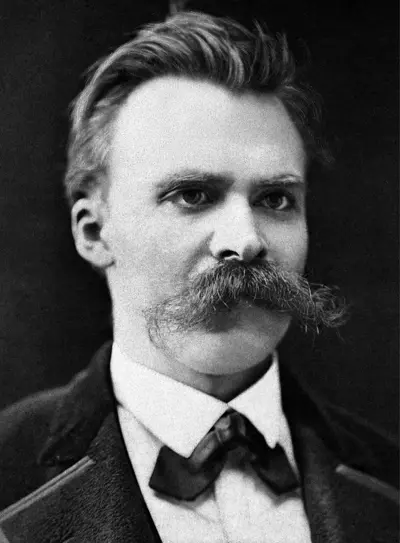
Friedrich Wilhelm Nietzsche was a German philosopher, cultural critic, composer, poet, writer, and philologist whose work has exerted a profound influence on modern intellectual history. He began his career as a classical philologist before turning to philosophy. He became the youngest person ever to hold the Chair of Classical Philology at the University of Basel in 1869 at the age of 24. Nietzsche resigned in 1879 due to health problems that plagued him most of his life; he completed much of his core writing in the following decade. In 1889, at age 44, he suffered a collapse and afterward a complete loss of his mental faculties. He lived his remaining years in the care of his mother until her death in 1897 and then with his sister Elisabeth Förster-Nietzsche. Nietzsche died in 1900.
