Stephen Crane Quotes
Every sin is the result of collaboration.
Crane, Stephen. "The Blue Hotel." The Monster and Other Stories, Harper & Brothers, 1899, p. 177.


In some societies, drunkenness is an extenuating circumstance which diminishes moral and legal guilt. In others it is not. In the United States is sometimes is and sometimes is not. Generally, a drunk person will not be relieved of all guilt but often the charge will be lessened—for example from murder to manslaughter. Aristotle suggested, and in some Islamic countries it is observed that the person who commits a crime while drunk is punished twice—once for the crime and once for being drunk.

This is a proverb reflecting a major difference between Arab traditions of justice and that of most Western societies where guilt is not to be vested upon family and friends of a person who commits a crime. While Western jurisprudence recognizes harboring a fugitive as a crime, it is always considered a less heinous crime than the original murderer, robber or whatever. However, in the Bedouin tradition the befriender of the criminal is guilty of the same crime and deserves the same punishment as the criminal. Ironically, Arabs are not the only people with this notion. Sephardic Jews (whose roots and origins are from Spain and the Middle East and who spent many generations in Arab dominated and controlled lands tended to use a different standard from the traditional European Jews with regard to retaliation for acts of terrorism and often used the principle illustrated by this proverb to justify bulldozing the homes of terrorists even after they were dead and attacking associates of leaders of terrorist organizations.


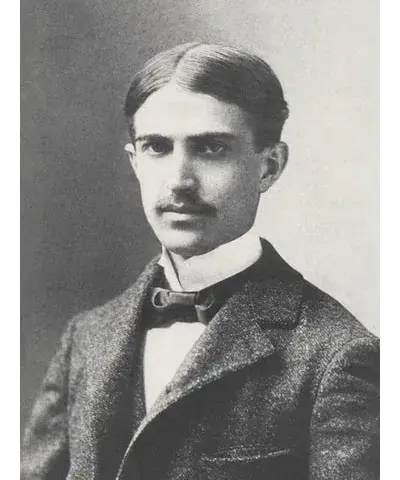
Stephen Crane was an American poet, novelist, and short story writer. Prolific throughout his short life, he wrote notable works in the Realist tradition as well as early examples of American Naturalism and Impressionism. He is recognized by modern critics as one of the most innovative writers of his generation.
