Jean Anouilh Quotes
Every man thinks God is on his side. The rich and powerful know that he is.
Jean Anouilh, 1910-1987, French Writer, The Lark
Sourced by: Eigen's Political and Historical Quotations


Kentucky was a slave state but public opinion was not clearly in favor of secession. Governor Magoffin was a Southern sympathizer and wanted Kentucky to secede with the other slave states. However, the education level of Kentucky was greater than those of the deep South and the State Legislature and many Union patriots. Only 16% of Kentucky were slaves. The economy of Kentucky was much more involved with the Northern States than the other Southern states. The legislature rebuffed the Governor’s call for a secession convention. Then Magoffin demanded that President Lincoln remove the Federal Troops that had been stationed in Kentucky. Lincoln did not want the Southern forces to occupy Kentucky and then use their occupation to pressure the State into joining the confederacy. Also, Lincoln took the position that as long as Kentucky was a state of the United States they were obligated to assist in putting down the rebellion. At this time, the Kentucky Congressional Delegation was overwhelmingly pro Union, as was the new State legislature which had such a pro-Union majority that they could override the Governor’s veto. Less than two weeks later, September 4, 1861, Confederate Major General Leonidas Polk tried to occupy Kentucky as Lincoln had feared, and the Legislature asked the Federal Government to send more troops and eject the Southern forces from the South of Kentucky. Kentucky Confederate sympathizers formed a rump government and voted to secede, and despite Jefferson Davis’s concerns that the State Legislature was being bypassed, Kentucky was accepted in the Confederacy. The result was that there were Kentucky military units in the Confederate Army and in the Union Army with the latter being in the majority. Kentucky was on both sides. This delicate balance and that of Maryland was why Lincoln did not include those states in his Emancipation Proclamation.


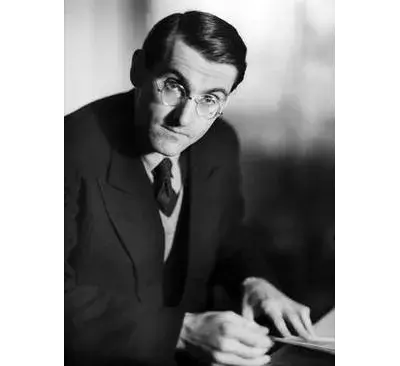
Jean Marie Lucien Pierre Anouilh was a French dramatist whose career spanned five decades. Though his work ranged from high drama to absurdist farce, Anouilh is best known for his 1944 play Antigone, an adaptation of Sophocles' classical drama, that was seen as an attack on Marshal Pétain's Vichy government. His plays are less experimental than those of his contemporaries, having clearly organized plot and eloquent dialogue. One of France's most prolific writers after World War II, much of Anouilh's work deals with themes of maintaining integrity in a world of moral compromise.
