Gore Vidal Quotes
Every four years the naive half who vote are encouraged to believe that if we can elect a really nice man or woman President everything will be all right. But it won't be. Any individual who is able to raise $25 million to be considered presidential is not going to be much use to the people at large. He will represent oil, or aerospace, or banking, or whatever moneyed entities are paying for him. Certainly he will never represent the people of the country, and they know it. Hence, the sense of despair throughout the land as incomes fall, businesses fail and there is no redress.
Vidal, Gore. United States: Essays 1952-1992. Random House, 1993.

This was written 20 years before this issue really came to major public discussion in 2012. Vidal was often ahead of his time on matters.


His unusual theory was that if government could or did not do much to affect the economy, there would be no reason for a large corporation to invest money in electing a particular party or candidate. Therefore the way to get the influence of big money out of politics is to reduce the role of government drastically. Paul was one of the very few Conservative politicians who would publicly state that the reasons that corporations made campaign contributions was to buy political favors, favorable legislation or tax treatment. If corporate investments did not pay off for the company, shareholders would not tolerate spending investment money for a particular political philosophy as most companies have shareholders representing the range of American political opinion and their investments should pay off to the bottom line—profits.
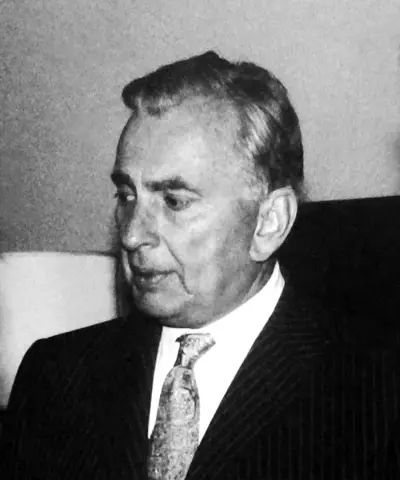
Eugene Luther Gore Vidal was an American writer and public intellectual known for his epigrammatic wit, patrician manner, and polished style of writing. Vidal was openly bisexual and his novels often dealt with LGBT characters, which was unusual at the time. Beyond literature, Vidal was heavily involved in politics. He twice sought office—unsuccessfully—as a Democratic Party candidate, first in 1960 to the United States House of Representatives (for New York), and later in 1982 to the U.S. Senate (for California).
