Nicholas M. Butler Quotes
Every attempt, by whatever authority, to fix a maximum of productive labor by a given worker in a given time is an unjust restriction upon his freedom and a limitation of his right to make the most of himself in order that he may rise in the scale of the social and economic order in which he lives.
Nicholas M. Butler, 1862-1947, President, Columbia University, Nobel Laureate in Peace, Republican Party Leader
Sourced by: Eigen's Political and Historical Quotations


Ford was among the early attackers of the cigarette. He announced that he would refuse to employ smokers {600552}.

The Grammar Curmudgeon


Jefferson was one of the first political and economic thinkers to express concern over the “wage slave” concept of the industrial revolution. This was one of the major reasons that he was not in consonance with Alexander Hamilton in his economic vision for America. While we followed the Hamilton direction, there are still issues of maintaining freedom and independence for an employee in modern nations and economies.

In 1905 President Roosevelt supported a Pure Food act. Business interests opposed it with such arguments as:

Arguing against government imposed minimum wages and unemployment insurance:

Internal population movement was tightly controlled in China for fear that the huge body of rural peasants would swamp the cities seeking economic opportunity. In 2000 the Chinese were debating the wisdom of this policy.

Labor reform was a burning issue in most of the industrialized countries of the world. The two areas that legislation was under consideration all over were working hours and child labor. There were no overtime provisions, employers were free to require workers to work 7 days for as many hours as they wanted. There were no limitations on the use of child labor. This is one of the classic conservative oppositions to these reforms. Ironically to us today, those against reform argued that it was disrespectful of the working man to take away his freedom to work whatever hours he so chose, and it was disrespectful of the workers role as a head of family to decide for him when and under what conditions his children could work. Germany at the time was a very dramatic example of the struggle as the Chancellor was opposed to all labor reform and Kaiser Wilhelm II felt that reforms were needed. The two most powerful Germans were split on this issue as were people in most countries.


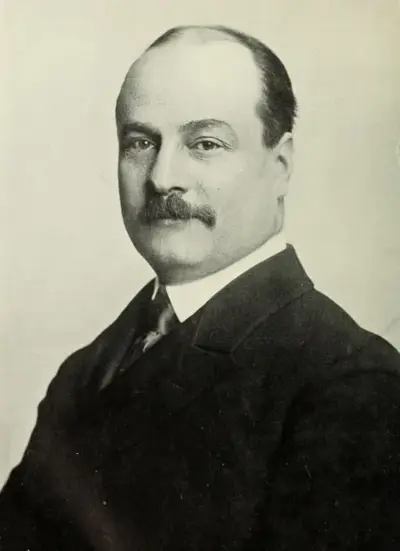
Nicholas Murray Butler was an American philosopher, diplomat, and educator. Butler was president of Columbia University, president of the Carnegie Endowment for International Peace, a recipient of the Nobel Peace Prize, and William Howard Taft's running mate in the 1912 United States presidential election. He became so well known and respected that The New York Times printed his Christmas greeting to the nation every year.
