Paul Feyerabend Quotes
Events and developments, such as ... the Copernican Revolution, ... occurred only because some thinkers either decided not to be bound by certain "obvious" methodological rules, or because they unwittingly broke them.
Feyerabend, Paul. Against Method. Verso, 1993, p. 14.


This characteristic of science causes the politicians great difficulty when allocating public funds for scientific research. It is often very hard to attribute credit to the right scientist when a scientist herself might not yet realize the great significance of her work. Of a number of different scientists each contributing one step of a process when the person who worked on the last link could not possibly have done it without the others along the way. Who to fund and why is terribly frustrating which is why the National Science Foundation and the National Institutes of Health make most of their funding decisions on the basis of proposals and peer review and decision making. None the less, many politicians are constantly trying to interject their preferences, almost always based on their ignorance, especially when they can get research funds into their district.


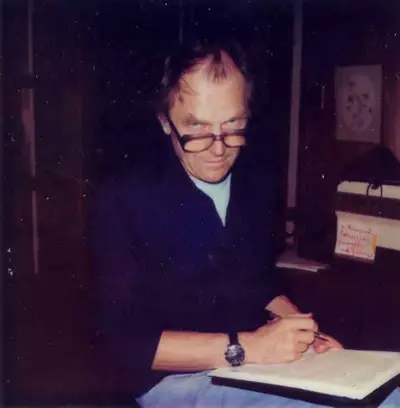
Paul Karl Feyerabend was an Austrian-born philosopher of science best known for his work as a professor of philosophy at the University of California, Berkeley, where he worked for three decades (1958–1989). At various points in his life, he lived in England, the United States, New Zealand, Italy, Germany, and finally Switzerland. His major works include Against Method (1975), Science in a Free Society (1978) and Farewell to Reason (1987). Feyerabend became famous for his purportedly anarchistic view of science and his rejection of the existence of universal methodological rules. He was an influential figure in the sociology of scientific knowledge. Asteroid (22356) Feyerabend is named in his honour.
