Desmond Tutu Quotes
Even the worst dictator, there is not a single one of them who would say "Oh yes, I violate human rights." They all claim "oh no, we respect human rights" even when they are doing the most egregious things.
Tutu, Desmond. Interview by the Academy of Achievement. Academy of Achievement, 21 Feb. 2003.


See {585638} for the kind of statement that led people to fear him as a dictator.

Fremont and some of the Radical Republicans wanted Lincoln immediately to declare the slaves of the rebelling states free. As a major general in charge of an area, he wrote a military order emancipating all the slaves in his jurisdiction. President Lincoln countermanded the order as soon as he found out. He wanted Fremont to only free the slaves whose owners were actively working against the union. Lincoln needed to hold the border states like Maryland in the Union and was working on a plan whereby slave owners who were loyal to the Union would be economically compensated when their slaves were freed. If loyal slaveholders in Fremont’s area would lose their slaves with no compensation, Lincoln feared that the otherwise loyal border states would be driven to the confederacy thus shifting the balance of power. Lincoln had his own plan for emancipation and would not allow Fremont to alter that. As a result of this speech, the Radical Republicans nominated Fremont to run against Lincoln. For a few weeks he looked like he would run, but then he and Lincoln made a deal. Lincoln fired Montgomery Blair, Fremont’s arch enemy, from the cabinet, and Fremont withdrew from the election.


Roosevelt, after refusing to run for a third term in 1908, decided to run in 1912:


In 1804 Napoleon presented a motion to the assembly do be declared Emperor and restore law and order. Only one man spoke against it. The speech became one of Thomas Jefferson's favorites and he urged all to read it.


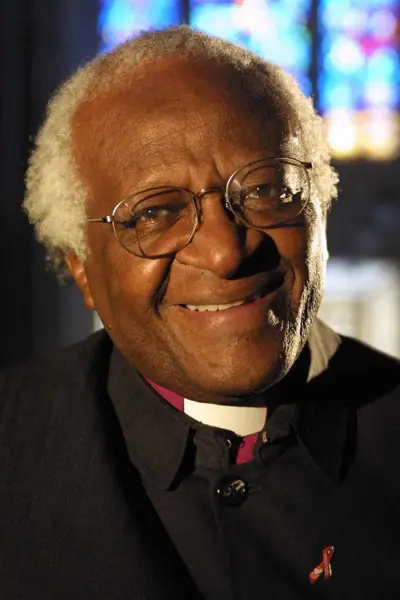
Desmond Mpilo Tutu OMSG CH GCStJ is a South African Anglican cleric and theologian, known for his work as an anti-apartheid and human rights activist. He was the Bishop of Johannesburg from 1985 to 1986 and then the Archbishop of Cape Town from 1986 to 1996, in both cases being the first black African to hold the position. Theologically, he sought to fuse ideas from black theology with African theology.
