Alexis de Tocqueville Quotes
Even despots accept the excellence of liberty. The simple truth is that they wish to keep it for themselves and promote the idea that no one else is at all worthy of it. Thus, our opinion
of liberty does not reveal our differences but the relative value which we place on our fellow man. We can state with conviction, therefore, that a man's support for absolute government is
in direct proportion to the contempt he feels for his country.
Tocqueville, Alexis de. The Old Regime and the French Revolution. Translated by Stuart Gilbert, Doubleday Anchor Books, 1955, p. xiii.


The Illuminati was a secret society. At the time, anyone who differed with the Church on issues of philosophy, ethics or religion could be tortured and burned at the stake, and anyone who criticized the Monarchy could be tortured and hung or beheaded. The result was the concept of a secret society of which the Illuminati was one.
Honore Gabriel Victor Requiti. The French King had just opened the French National Assembly which contained deputies (delegates) from the clergy, the nobility and the people. The King had made what some deputies thought was a very constructive and responsible speech opening the assembly. Mirabeau observed that as long as there was an absolute monarch in place, even a benign one. It was the presence of a monarch itself that was evil.


Describing the career of Alexander Hamilton:


This is one of the more passionate and colorful descriptions of Conservatives in the political literature. The conservative party were called Orangists as they were supporters of the monarchy of William V, Prince of Orange. As in modern times the conservatives included the upper classes, business people, religious advocates. The political conservatives were passionate, respected established authority, and in general, reactionary. The tended even then to flip-flopping as the conservatives had several factions--business conservatives, religious conservatives, monarchial conservatives, authoritarian conservatives and others. Depending on which faction was most powerful at the time, conservatives might advocate one position and change later when another faction was in control. Valckenaer also had some choice words to reflect his disdain for them. It is noteworthy that this description could describe political conservatives in almost any time period, in any culture. For example, it might have been a liberal writing about the Tea Party Republicans in 2014.


With so many revolutionary rulers of new nations suppressing all opposition, the history of Ataturk and Turkey is unique. Ataturk was so popular and his People’s Party so successful that there was no opposition and Turkey had one party rule. However, Ataturk was determined to have Turkey become a parliamentary democracy as good as the Western nations of Europe. So a tradition of multi-party democracy was needed. So Ataturk actually went to his friend Fethi Okyar and asked him to start an opposition party and oppose the government. Fethi was a strong supporter of the revolution and generally was in concurrence with Ataturk and the People’s Party on everything. Ataturk however convinced him that they had to start a tradition that would take Turkey through the future, and he did create a new party-- Serbest Cumhuriyet Fırkası (Liberal Republican Party) and worked hard to find differences with the People’s Party and the Government. One immediate contribution was the oversight that the new party provided—a strong tradition that exists to this day in Turkey.

Early in his career, Santa Anna was an enthusiast for democracy. However, the republican form of government did not work at the time in Mexico and he developed into a despot and dictator.


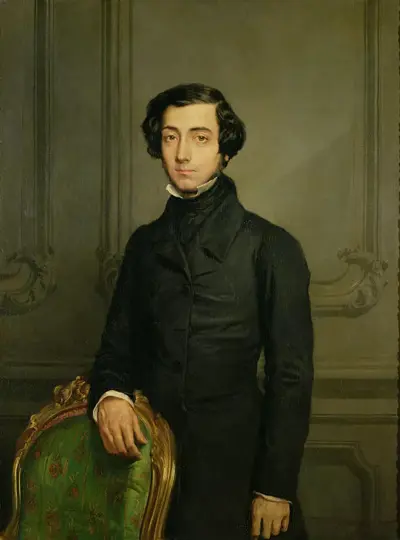
Alexis Charles Henri Clérel, comte de Tocqueville, colloquially known as Tocqueville (/ˈtɒkvɪl, ˈtoʊk-/), was a French aristocrat, diplomat, political scientist, political philosopher and historian. He is best known for his works Democracy in America (appearing in two volumes, 1835 and 1840) and The Old Regime and the Revolution (1856). In both, he analysed the improved living standards and social conditions of individuals as well as their relationship to the market and state in Western societies. Democracy in America was published after Tocqueville's travels in the United States and is today considered an early work of sociology and political science.
