Bill Drayton Quotes
Entrepreneurs cannot be happy people until they have seen their visions become the new reality across all of society.
Bornstein, David. How to Change the World: Social Entrepreneurs and the Power of New Ideas. Oxford University Press, 2004, p. 122.


This is a very important economic-political quotation. One conservative mantra in the 20th and 21st centuries was that business growth and development will be spurred by tax cuts in the marginal tax rate that the businessperson would have to pay. “Marginal” means the additional tax for each additional dollar of income. However, the development and growth of most businesses, especially the entrepreneurial ones that tend to create the most new high wage jobs. Bill Gates, Henry Ford, Steve Jobs, Thomas Watson Jr. and other creators of great business enterprises, in general do not even consider their potential profit as the most important reward. They are almost always on a mission to change the way people function in the world. They generally want to make money but the driving factor is really the change in society that they will produce. While Gates and other great business creators do not change their business behavior on the bases of marginal tax rates (or any other kind to tax rates for the matter), the 2nd and 3rd generation of business manager who takes over existing companies is motivated in great part by marginal tax rates. Summers and many others argue that not only are the best jobs created by those who are unmotivated by tax rates, but they are the same businesses that tend to produce most of the great innovations of society. Therefore, find other ways to incentivize the entrepreneurs rathefr than marginal tax rate policy.


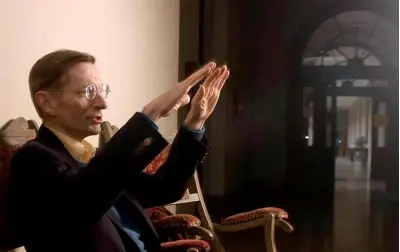
William Drayton (born 1943 in New York City) is a social entrepreneur. Drayton was named by U.S. News & World Report as one of America's 25 Best Leaders in 2005. He is responsible for the rise of the phrase "social entrepreneur", a concept first found in print in 1972.
