Russell Kirk Quotes
Either order in the cosmos is real, or all is chaos. If we are adrift in chaos, then the fragile egalitarian doctrines and emancipating programs of the revolutionary reformers have no significance; for in a vortex of chaos, only force and appetite signify.
Kirk, Russell. The Roots of American Order. Open Court, 1974, p. 6.


At the time, Capetown was under the control of the Dutch East India Company which had recruited Gordon from Scotland. There was a wave of liberality following the Enlightenment, the American Revolution, and the very vocal English, anti-slavery, reformers. The Dutch were concerned mainly with making money, and that they thought that meant stability and the status quo. Gordon was their strong spokesman on this. Like American Southern slave owners, Gordon read the Bible as God endorsing slavery and the inferiority of Blacks. Thus, reformers did not "believe in God any more".

It is hard for us today to understand why intelligent, thoughtful, people would seriously consider and even advocate anarchy. Yet there were many intelligent people who preached anarchy. The key to understanding this is that it is also hard for us to realize how terrible and actually dangerous was typical life under the Russian Government of the Czars. It was not only that most people were serfs--virtually slaves, but the government officials, the military and civilian both, could and did, abuse people in every way imaginable. In America today, if any of us were unfortunate to be the victim of violence, the odds are high that it would be at the hands of another citizen. In Russia (and other countries) at the time, the odds were that the perpetrator of the violence was a government official or government sanctioned person—police, military, aristocrats, civil officers. As but one example. Cossacks would frequently get drunk, pillage and rape a community and kill any who resisted—all with impunity. This quotation from Tolstoy is the classic argument of the anarchist at the time. It was impossible that the absence of government could be as bad as the government then was.


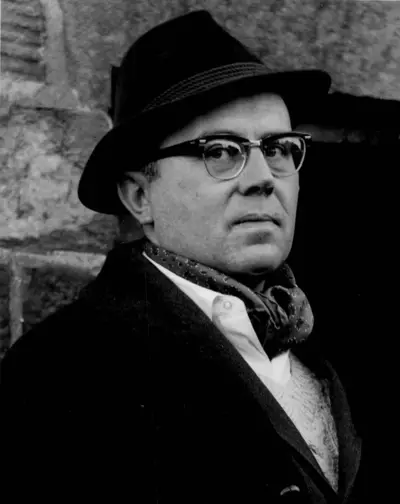
Russell Amos Kirk was an American political theorist, moralist, historian, social critic, and literary critic, known for his influence on 20th-century American conservatism. His 1953 book The Conservative Mind gave shape to the postwar conservative movement in the U.S. It traced the development of conservative thought in the Anglo-American tradition, giving special importance to the ideas of Edmund Burke. Kirk was considered the chief proponent of traditionalist conservatism. He was also an accomplished author of Gothic and ghost story fiction.
