Lawrence Wilkerson Quotes
Edward Snowden is anything but narcissist. In fact, I wonder every day how he could come up with the courage, muster the courage to sacrifice everything just so he could do, as he said in rather eloquent speech initially, alert the American people to what was going on. Call him a traitor, call him whatever you want to. The fact is he is a symptom of the disease, and the disease is constant war and the national security state. That is what we've become. That is our raison d'être in the world today, to wage war.
Wilkerson, Lawrence. Interview by Paul Jay. The Real News Network, 24 June 2013.


Edward Snowden, a defense contractor and government employee, publicly revealed that the U. S. intelligence agencies were intercepting and keeping a data base of ALL telephone calls and all Internet e-mails. The government had denied that this was so, and had classified the domestic spying program as Top Secret. Snowden had signed an agreement not to reveal any classified information, and he violated the agreement. Therefore the government was trying to extradite Snowden from Russia at the time so that they could criminally prosecute him. However, there was great debate as to whether the spying on all Americans was legal and Constitutional. Many saw Snowden as a “whistleblower” and pointed out that the government which had lied wanted to prosecute Snowden for telling the truth. Fein, an attorney, was representing Snowden and his family.


Although it seems incredible to us today, thousands of people were arrested and prosecuted under the Espionage Act. The government particularly targeted leftists such as Eugene V. Debs, Bill Haywood, J. Philip Randolph, Victor Berger, John Reed, Max Eastman, and Emma Goldman. Debs was sentenced to 20 years in prison for criticizing the Act itself.


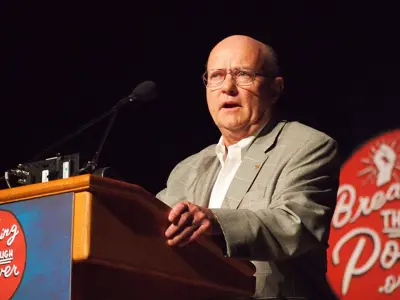
Lawrence B. Wilkerson is a retired United States Army Colonel and former chief of staff to United States Secretary of State Colin Powell. Since the end of his military career, Wilkerson has criticized many aspects of the Iraq War, including his own preparation of Powell's presentation to the UN, as well as other aspects of American policy in the Middle East.
