Vitruvius Quotes
Economy denotes the the proper management of materials and of site, as well as a thrifty balancing of cost and common sense in the construction of works. ...the architect does not demand things which cannot be found or made ready without great expense. For example: it is not everywhere that there is plenty of pitsand, rubble, fir, clear fir, and marble... Where there is no pitsand, we must use the kinds washed up by rivers or by the sea... and other problems we must solve in similar ways.
Vitruvius. The Ten Books on Architecture. Translated by Morris Hicky Morgan, Harvard University Press, 1914, p. 16.


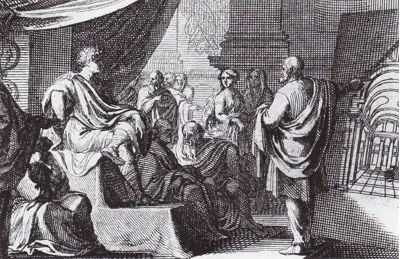
Marcus Vitruvius Pollio (/vɪˈtruːviəs ˈpɒlioʊ/; c. 80–70 BC – after c. 15 BC), commonly known as Vitruvius, was a Roman author, architect, and civil and military engineer during the 1st century BC, known for his multi-volume work entitled De architectura. He originated the idea that all buildings should have three attributes: firmitas, utilitas, and venustas ("strength", "utility", and "beauty"). These principles were later widely adopted in Roman architecture. His discussion of perfect proportion in architecture and the human body led to the famous Renaissance drawing of the Vitruvian Man by Leonardo da Vinci.
