Sendhil Mullainathan Quotes
Economists specialize in pointing out unpleasant trade-offs - a skill that is on full display in the health care debate. We want patients to receive the best care available. We also want consumers to pay less. And we don't want to bankrupt the government or private insurers. Something must give.
Mullainathan, Sendhil. "When a Co-Pay Gets in the Way of Health." The New York Times, 10 Aug. 2013.


Actually politicans, civil servants, and private sector individuals who have been working with heath care all knew how complicated health care was. But Trump, who had no experience with health care and its cost and funding structure, when he was a candiate had advisors who were ideologues and had little experience themselves. So Trump campaaigned explaining how simple it was to repeal Obama Care, and replace it with legislation that would cut the insurance premiums, increase the quality of medical care and cover more people while giving consumers protections like no caps and refusals for previous conditions. When he got into office, he discovered that all his campaign ideas would indeed accomplish the objectives that he claimed but it would also mess up other parts of the health system. Nothing could be done in isolation, So he did not repeal Obama Care and made this statement to explain wht he had discovered since assuming office.

At the time in America, the insurance companies only paid out less than 80 percent of all the money they took in for health insurance. More than 20 percent went into their high overhead and profits. In contrast, to the 20 percent or more that it costs with insurance companies to administer health insurance payments, the agency that performs the same function for Medicare doe so with only a 6 percent cost Sanders argued that by getting rid of the insurance companies, the nation could save about 14 percent of the entire insured medical bills for the nation—many billions of dollars which would reduce average health insurance premiums by 14 percent. Opponents argue that the would be a socialist system and give too much potential control of individual health matters to a government operated or government controlled organizations. Politicians, in order to look good with the voters, would lower premiums and also pay out less either shortchanging doctors and hospitals or rating medial care somehow.


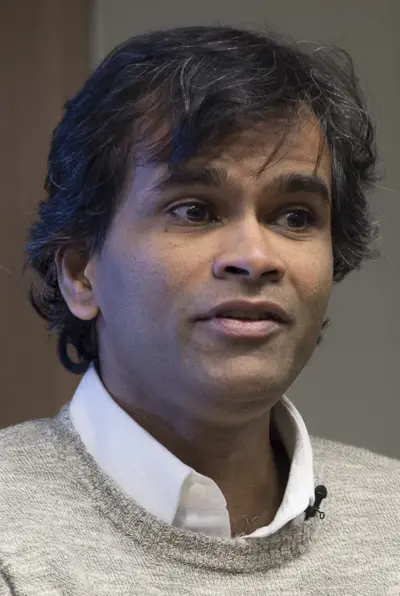
Sendhil Mullainathan (pronunciation (help·info)) (born c. 1973) is an American professor of Computation and Behavioral Science at the University of Chicago Booth School of Business and the author of Scarcity: Why Having Too Little Means So Much (with Eldar Shafir). He was hired with tenure by Harvard in 2004 after having spent six years at MIT.
