Cao Cao Quotes
Each man is for his lord, do not give chase.
Luo, Guanzhong. Three Kingdoms: A Historical Novel. Translated by Moss Roberts, University of California Press, 1991, p. 211.

This testimony turned out to be a tactical error. The main purpose of Tojo was to protect Emperor Hirohito from responsibility for the war. See {587277}. But by admitting that he never disobeyed even the Emperor’s wishes, he made it clear that he had implemented the Emperor’s desired policies. Therefore, Hirohito must have been responsible. After this testimony there was some delay and he changed his testimony claiming that once he disobeyed the Emperor when he took the nation to war. Few believed this second version, but it was sufficient to keep Hirohito from being charged—which despite many calls for his trial, General MacArthur also did not want the Emperor brought to account as the institution was making the occupation of Japan very easy.


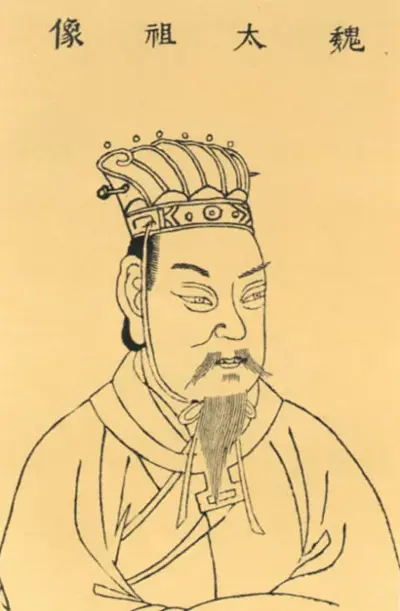
Cao Cao, courtesy name Mengde (Chinese: 孟德), was a Chinese warlord, statesman and poet. He was the penultimate grand chancellor of the Eastern Han dynasty who rose to great power in the final years of the dynasty. As one of the central figures of the Three Kingdoms period, he laid the foundations for what was to become the state of Cao Wei and ultimately the Jin dynasty, and was posthumously honoured as "Emperor Wu of Wei" although he never was an emperor during his lifetime. He remains a controversial historical figure, and is often portrayed as a cruel and merciless tyrant in subsequent literature; however, he has also been praised as a brilliant ruler and military genius with unrivalled charisma who treated his subordinates like his family.
