Richard Holbrooke Quotes
Each agency has … acquired certain “pet projects” which its senior officials promote. These are often carried out by despite concern and even opposition by mid-level officials of other agencies as part of a tacit trade off: “We’ll let you do your thing if you let us do ours. Such deals … are almost never explicit, but are nonetheless well understood by the participants.
In some areas the agencies even agree never to question or fight appropriation requests of the other and the President, Office of Management and Budget, and Congress is often presented with huge appropriations requests that other agencies never seem to have an criticism of. The Armed Services are notorious here. The Army will never criticize a new weapons system the Navy or Air Force wants nor will the Army ever argue that they could produce more with a different idea of their own. In return, the Army is never challenged by the other services in return just as Holbrook describes. In a sense, this has taken most of the competition for good ideas and the spending of public money out of the system and gives a modest amount to all regardless of need, worth, and public payoff.
Richard Holbrooke, 1941-2010, U. S. Delegate to the United Nations, Assistant Secretary of State and Special Envoy (Democrat), Ambassador to Germany, “The Machine That Fails”, Foreign Policy, Number 1, Winter 1970-1971
Sourced by: Eigen's Political and Historical Quotations


Though the Communist Party was trying to organize and gain support from the unemployed, it was difficult due to the bureaucracy.

The President wanted the White House slimmed as an example and reduced the First Lady’s staff markedly. Roslyn Carters response was, “But I’m not everybody!” She didn’t get her staff increase.
This statement has represented the reality of governments before and after.


In the Nez Perce and most other Native American societies, there were Chiefs and occasionally, for special circumstances, War Chiefs, but few if any other officials, thus producing a very flat, egalitarian society. But the whites had many layers of bureaucrats and petty officials. Governors, The President, Members of Congress, State Legislators, Generals, Sheriffs, Indian Agents, tax collectors, and the like. On the Papago Indian reservation, there was great difficulty on a construction project as even the concept of a work foreman was an uncomfortable notion. No Papago wanted to be directed or ordered about by anyone else even on a work gang. And do no one wanted to assume a position of authority or be responsive to a fellow other than the Chief and the tribal elders.


The Arab Culture has traditionally been one of poetic oratory with much exaggeration. The last of the three statements above was his attempt to limit this tendency when facts were needed. This is one of his desires that was short-lived and is a huge problem in modern Arab administration of most things.

Gorter predicted some of the problems that would develop with trade unions as the industrial state grew ever larger. The problem is a challenge to labor unions as they get very large. Lenin was not that concerned with making sure that unions were democratic, but many of the left wing liberal socialists in Western Europe were.
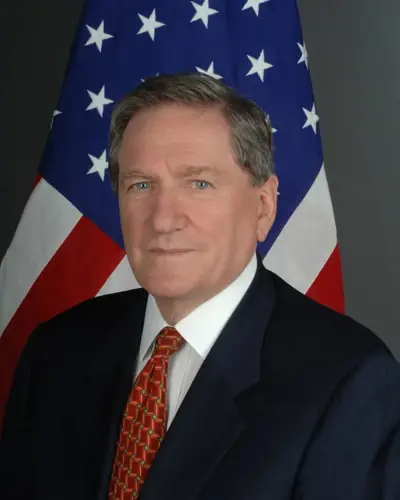
Richard Charles Albert Holbrooke was an American diplomat and author. He was the only person to have held the position of Assistant Secretary of State for two different regions of the world (Asia from 1977 to 1981 and Europe from 1994 to 1996).
