Louis D. Brandeis Quotes
During most of my life, my contact with Jews and Judaism was slight. I gave little thought to their problems, save in asking myself, from time to time, whether we were showing by our lives due appreciation of the opportunities which this hospitable country affords. My approach to Zionism was through Americanism.
Brandeis, Louis D. "Zionism and the American Jews." Brandeis on Zionism: A Collection of Addresses and Statements by Louis D. Brandeis, Zionist Organization of America, 1942, p. 22.


This was true in 1936 for almost all Jewish immigrants. Reform Judaism was actually started and developed in the United States to blend the Jewish assimilation to modern America with the philosophy and values of Judaism. Most American Jews gravitated to the Reform communities and synagogues. However starting in the 1950’s there were some ultra-orthodox Jewish groups who began to preach against assimilation. To them, the greatness of America was that they did not have to Assimilate. Like the Amish and a few other religious groups they could maintain their oldest traditions and be protected and tolerated by America. These were and are a minority of Jewish Americans. However in the late 20th century many orthodox and the “Conservative Branch” of Judaism in America began to be concerned that the result of Jewish assail;ration and the reduction of anti-Semitism was an increase in religious intermarriage of American Jews. They worried that the Jewish community will diminish over time to a much smaller minority. So they have instituted programs to limit Jewish assimilation to diminish intern,marriage. The majority of Jews however continue as Goldie Corash Michelson descriptor in 1936.


The advocacy of the Jewish Return to the Holy Land was not first suggested or stated by European Jewish Zionists. Brightman was not only the first Christian to urge the return of the Jews, but the secon person of any faith to suggest it. He was only preceded by a Jewish refugee from the Spanish Inquisition--Joseph Nasi in 1561.

O’Connell also fought for Jewish equality as well as Catholic Equality.

See {588181} for more about the Rally. Kuhn followed the Nazi Party line that claimed America was controlled by Jews. At the same meeting he referred to President Franklin Delano Roosevelt as “President Franklin D. Rosenfeld using a typical Jewish name. Many Nazis believed that the President was a Jew who had changed his name.


He and almost all of the Jews in Germany were expected to act like Germans. There was no room for maintaining and developing their own ethnic customs and traditions. When he arrived at New York, he was treated as a great celebrity by Mayor La Guardia, who was fluent in Yiddish, and other dignitaries some of whom were Jews and even met President Warren G. Harding. He lectured at City College and for the first time in his life saw Jews who had any distinguishing culture and customs—and the informality, egalitarianism, gregarious, free speaking, fun loving was just the opposite of the norms that he had grown up with in Germany which he did not like. See {640911}. He would later become a part of that culture and be seen as a leader, even being offered the Presidency of the new state of Israel in 1949.


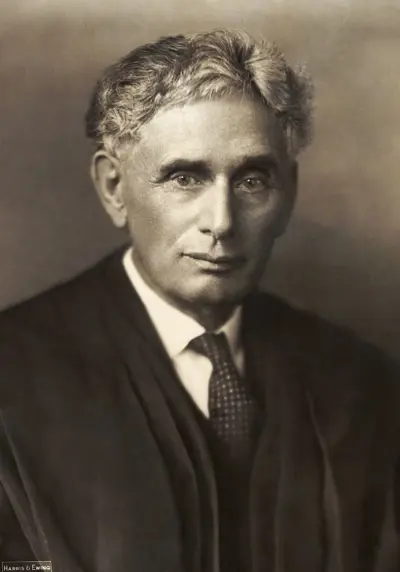
Louis Dembitz Brandeis was an American lawyer and associate justice on the Supreme Court of the United States from 1916 to 1939. He was born in Louisville, Kentucky, to Jewish immigrant parents from Bohemia (now in the Czech Republic), who raised him in a secular home. He attended Harvard Law School, graduating at the age of 20 with the highest grade point average in the law school's history. Brandeis settled in Boston, where he founded a law firm (that is still in practice today as Nutter McClennen & Fish) and became a recognized lawyer through his work on progressive social causes.
