Ernest van den Haag Quotes
Don’t conflate the morality of the death penalty with its unjust distribution among those who are guilty … Equality is less important, morally, than justice … We ought to distribute justice as equally as we can, even though we cannot distribute it perfectly.
He was one of the most articulate advocates for capital punishment.
Ernest van den Haag, 1914-2002, Attorney & Legal Scholar, The Ultimate Punishment: A Defense
Sourced by: Eigen's Political and Historical Quotations


The Senator was arguing against a bill to correct an aspect of the immigration law where infants and very young clildren are broght to the United States by parents who entered illegally. The children grow up in the United States—the only country and home that they have ever known. American law required that they be deported to “their countries” which they have no memory of and many do not even speak the language or know the culture. Sessions, is an example of the view that law defines justice. Therefore laws cannot be unjust nor can enforcing the law. Opponents point out that even in the United States we have, in earlier times, “enforced the law” which we came to regret and see as an injustice. The Fugitive slave laws, the Southern racial discrimination laws, and the law allowing Japanese American Citizens to be interned and lose their land during WWII are a few examples of laws, the enforcement of which is seen by most Americans as having been unjust. The execution of “witches” in early America was in conformity with the law.


Brigham's remark was made in 1853—the Saints were in the midst of a serious struggle for subsistence in the Salt Lake Valley. Famine was a serious threat in these years and those who thieved from their neighbors under such conditions put others' well-being and even lives at risk. The frontier was known for lawless behavior among some, far from military or police power. Under these conditions, thievery could well result in the suffering and death of victims and others in their communities—hence Young’s determination to stamp it out.


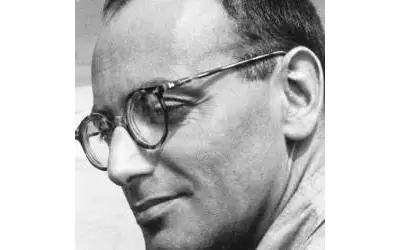
Ernest van den Haag was a Dutch-born American sociologist, social critic, and author. He was John M. Olin Professor of Jurisprudence and Public Policy at Fordham University. He was best known for his contributions to National Review.
