Patrick Henry Quotes
Do you remember any instance where tyranny was destroyed and freedom established on its ruins, among a people possessing so small a share of virtue and public spirit? I recollect none, and this more than the British arms makes me fearful of final success, without a reform.
Henry, William Wirt. Patrick Henry: Life, Correspondence and Speeches, vol. 1, Charles Scribner's Sons, 1891, p. 412.


The Illuminati was a secret society. At the time, anyone who differed with the Church on issues of philosophy, ethics or religion could be tortured and burned at the stake, and anyone who criticized the Monarchy could be tortured and hung or beheaded. The result was the concept of a secret society of which the Illuminati was one.


There was much anti-war sentiment in 1812. Reacting to anti-war literature in Boston bookstores:


His public written criticism of the King and government was unheard of at the time. See {621993} for the consequence.

He had just ascended to the throne of a notoriously corrupt state. The English Viceroy was going to install an administrator to clean things up. The new ruler asked for a chance to do so himself.


Those who have fought against dictatorial governments for their basic human rights, found after victory and the overthrow of the dictator, that there was another force fighting for control which would deny citizens human rights based on a theocracy. They wanted the end of the dictator so they could use their interpretation of a religion as the excuse to deny all citizens basic human rights.

Although there are many historical and political thinkers who do not agree that upheavals are inevitable or desirable in America, Vann Woodward and many others follow the school of American thought led by Thomas Jefferson and others of the founding fathers. With the exception of the Civil War most of the American upheavals, though painful to many losing privilege and power have not been massively bloody and have been mostly political.

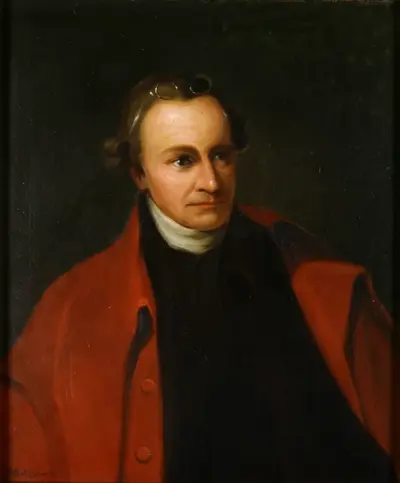
Patrick Henry was an American attorney, planter, politician, and orator best known for his declaration to the Second Virginia Convention (1775): "Give me liberty, or give me death!" A Founding Father, he served as the first and sixth post-colonial Governor of Virginia, from 1776 to 1779 and from 1784 to 1786.
