Thomas Moore Quotes
Disguise our bondage as we will, 'Tis woman, woman, rules us still.
Moore, Thomas. "To a Boy, with a Watch." The Poetical Works of Thomas Moore. Vol. 2, Longman, Orme, Brown, Green, and Longmans, 1840, p. 138.


This is the earliest surviving attempt of the Romans to formulate a legal code.


This view is very similar to that of some of the religious fundamentalists in America who would oppose most of the other Nazi doctrines.

This is one of the biblical passages which cause some Christian Fundamentalists to prescribe a secondary and subjugated role for women. Also the view that women, like children, should be seen and not heard. Also it supports those who object to women in the ministry or the priesthood or in senior teaching positions. See {587063}. It is useful to note that much of Islam which preaches a similar view of females, probably learned it from Christianity which preceded Islam by almost 600 years.


Ferrer was the last public figure to be executed in Europe for heresies like this.


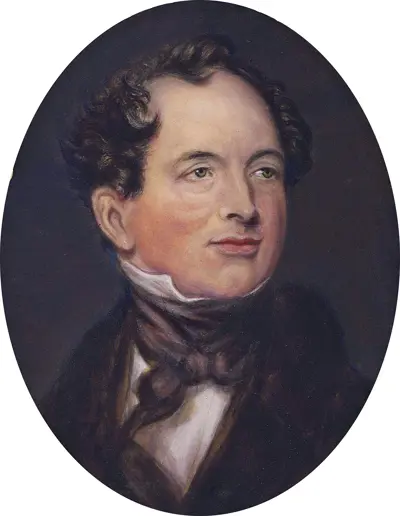
Thomas Moore was an Irish writer, poet and lyricist celebrated for his Irish Melodies. Their setting of English-language verse to old Irish tunes marked the transition in popular Irish culture from Irish to English. Politically, Moore was recognised in England as a press, or "squib", writer for the aristocratic Whigs; in Ireland he was accounted a Catholic patriot. Married to a Protestant actress and hailed as "Anacreon Moore" after the classical Greek composer of drinking songs and erotic verse, Moore did not profess religious piety. Yet in the controversies that surrounded Catholic Emancipation Moore was seen to defend the tradition of the Church in Ireland against both evangelising Protestants and uncompromising lay Catholics. Longer prose works reveal more radical sympathies. The Life and Death of Lord Edward Fitzgerald depicts the United Irish leader as a martyr in the cause of democratic reform. Complementing Maria Edgeworth's Castle Rackrent, Memoirs of Captain Rock is a saga, not of Anglo-Irish landowners, but of their exhausted tenants driven to the semi-insurrection of "Whiteboyism". Today, however, Moore is remembered almost alone either for his Irish Melodies (typically "The Minstrel Boy" and "The Last Rose of Summer") or, less generously, for the role he is thought to have played in the loss of the memoirs of his friend Lord Byron.
