George C. Marshall Quotes
Discussions without end have been devoted to the subject of peace, and the efforts to obtain a general and lasting peace have been frequent through many years of world history.
Marshall, George C. "Remarks at Princeton University." The Papers of George Catlett Marshall: 'The Whole World Hangs in the Balance,' January 8, 1947-December 31, 1949, edited by Larry I. Bland and Mark A. Stoler, vol. 6, Johns Hopkins UP, 2013, p. 54.


In 1799 the same article appeared again under the name of Dr. Benjamin Rush who may have plagiarized the original or, as some argue, may have actually authored the 1792 article.


The documentation of this quotation comes from a memorandum summarizing the meeting written by Presidential aide Harry Hopkins.

There were many who thought that the Russians would view the Mutual Security Act as aggressive and they might respond with some kind of aggressive retaliation and this could lead to war. Others felt that containment would reduce the likelihood of war.

1st Earl Baldwin of Bewdley. Chamberlain was about to leave for the Munich Conference where his appeasement emboldened Hitler and the Germans and dashed all hope of peace. Baldwin was out of office, but his support of the Munich appeasement changed his image from that of a popular statesman, to a craven appeaser. See {626930} for Churchill’s view of Baldwin.
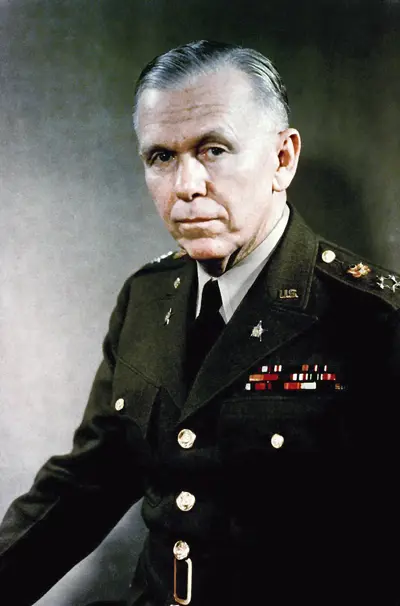
George Catlett Marshall Jr. was an American soldier and statesman. He rose through the United States Army to become Chief of Staff under presidents Franklin D. Roosevelt and Harry S. Truman, then served as Secretary of State and Secretary of Defense under Truman. Winston Churchill lauded Marshall as the "organizer of victory" for his leadership of the Allied victory in World War II. After the war, he spent a frustrating year trying and failing to avoid the impending civil war in China. As Secretary of State, Marshall advocated a U.S. economic and political commitment to post-war European recovery, including the Marshall Plan that bore his name. In recognition of this work, he was awarded the Nobel Peace Prize in 1953.
