Charles Kingsley Quotes
Did not learned men, too, hold, till within the last twenty-five years, that a flying dragon was an impossible monster? And do we not now know that there are hundreds of them found fossil up and down the world? People call them Pterodactyles: but that is only because they are ashamed to call them flying dragons, after denying so long that flying dragons could exist.
Kingsley, Charles. The Water-Babies: A Fairy Tale for a Land Baby. Macmillan and Co., 1863, p. 61.


He was addressing the misunderstanding that many laypeople and most anti-evolutionists have that if Evolution is only a theory why put so much stock in it. The layman often uses the word “theory” in opposition to “fact.” But to the scientist theories are of different types—those that are as of yet speculation and those for which a strong body of evidence exists. Evolution, like Relativity, has a huge amount of evidence supporting it. Yet in time every good scientist knows that all these proven theories will be modified with new knowledge. Relativity has been demonstrated as having errors initially by Einstein himself. The essence of these things are true although elements change. The early law of gravity is the best example. We know that it is wrong in many, circumstances—in space for example. But it, none the less, is fundamental to much analysis and with our much more sophisticated understanding of it we still talk of the “Law” of gravity even though we realize that it is not quite correct in all circumstances.


While this is often true, it is another Mises exaggeration using the word “every” in this quotation. Darwin’s theory of evolution was immediately accepted by most other scientists and intellectuals. The opponents then were the religious fundamentalists. The same is true today. Einstein’s Theory of Relativity was accepted by most other scientist as soon as they read it and worked out the mathematics. That was before there was any physical or experimental evidence, which did not come till 1919.


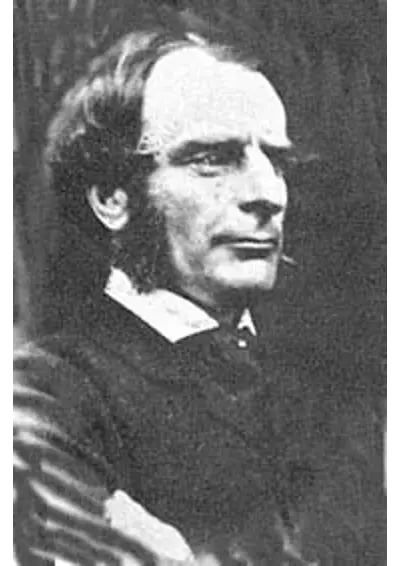
Charles Kingsley was a broad church priest of the Church of England, a university professor, social reformer, historian, novelist and poet. He is particularly associated with Christian socialism, the working men's college, and forming labour cooperatives, which failed, but encouraged later working reforms. He was a friend and correspondent of Charles Darwin.
