Oliver Wendell Holmes Jr. Quotes
Descartes commanded the future from his study more than Napoleon from the throne.
Oliver Wendell Holmes, 1809-1894, Author and Physician, Father of the Supreme Court Justice, Quoted in G. Simmons, Calculus Gems
Sourced by: Eigen's Political and Historical Quotations

Much of modern science involves non-intuitive concepts that can rarely if ever be discovered using common sense. It was hard enough for most people to accept the notion of an infinite number, but now we know that there are many infinite numbers and they are all different form one another. Darwinian thinking was contrary to most learned thought of the day, and even much public opinion today. Even Albert Einstein had to struggle to comprehend the findings of Quantum Mechanics which are very non intuitive—one object can be in two different places at the same time. Meanwhile, most people are totally unaware that the world around is does not correspond to normal human intuition and common sense. Yet these are the same and only tools that we continue to use in making decisions about our society. And the fundamental truths of yesterday, the foundation of past thinking and glory, are the naïve simplifications and errors of today and become the superstitions of tomorrow.


The first clause of the quotation was itself a quotation that was originated by the eminent British Jurist, Historian and academic--Sir Frederick Pollock. Spinoza has been as influential on intellectuals and their works as any other and is up there with Aristotle and Plato, However, while through his influence, the average person is familiar with many of his ideas, his writing is so abstract that few people can understand it with out a great intellectual effort. Baruch Spinoza has influenced thought on many areas but science, in particular, has benefited from his analyses and ideas. See Einstein's Quotation 644230.


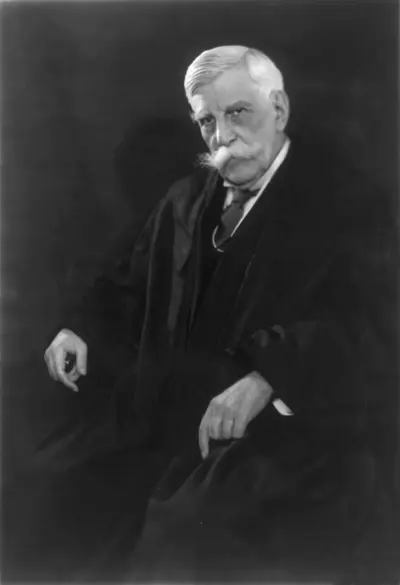
Oliver Wendell Holmes Jr. was an American jurist who served as an Associate Justice of the Supreme Court of the United States from 1902 to 1932. Noted for his long service, concise and pithy opinions, and deference to the decisions of elected legislatures, he is one of the most widely cited United States Supreme Court justices in history, particularly for opinions on civil liberties and American constitutional democracy, and is one of the most influential American common law judges, honored during his lifetime in Great Britain as well as the United States. Holmes retired from the court at the age of 90, an unbeaten record for oldest justice in the federal Supreme Court (although John Paul Stevens was only 8 months younger when he retired on April 12, 2010). He previously served as an Associate Justice and as Chief Justice of the Massachusetts Supreme Judicial Court, and was Weld Professor of Law at his alma mater, Harvard Law School.
