Paul Klee Quotes
Democracy with its semi-civilization sincerely cherishes junk. The artists power should be spiritual. But the power of the majority is material. When these worlds meet occasionally, it is pure coincidence.
Klee, Paul. The Diaries of Paul Klee, 1898-1918. Edited by Felix Klee, University of California Press, 1964, p. 159.


Meiji the Great. “Public Opinion” had the same meaning for the Japanese of this time as modern Western democracies perceive it with one exception. The public did not include all; it included only landlords— who owned land and had peasants on it. However, even asking them was an incredible step forward. The Emperor even sent formal written surveys to the landlords and in that sense, Japanese methodology of ascertaining public opinion was far ahead of the West. These reforms were opposed by the nobility and later the military, and by the 1930s there was no semblance of democracy left in Japan.


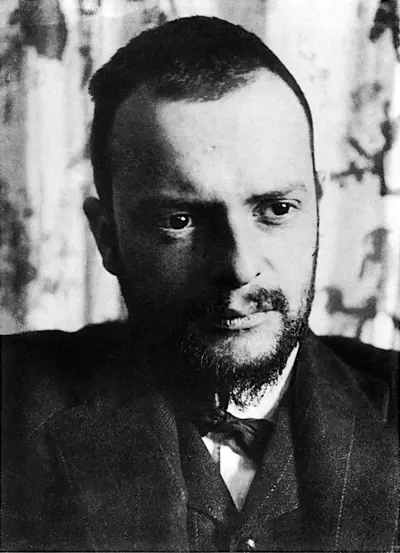
Paul Klee was a Swiss-born German artist. His highly individual style was influenced by movements in art that included expressionism, cubism, and surrealism. Klee was a natural draftsman who experimented with and eventually deeply explored color theory, writing about it extensively; his lectures Writings on Form and Design Theory (Schriften zur Form und Gestaltungslehre), published in English as the Paul Klee Notebooks, are held to be as important for modern art as Leonardo da Vinci's A Treatise on Painting for the Renaissance. He and his colleague, Russian painter Wassily Kandinsky, both taught at the Bauhaus school of art, design and architecture in Germany. His works reflect his dry humor and his sometimes childlike perspective, his personal moods and beliefs, and his musicality.
