Shoghi Effendi Quotes
Could anything less than the fire of a civil war with all its violence and vicissitudes - a war that nearly rent the great American Republic - have welded the states, not only into a Union of independent units, but into a Nation, in spite of all the ethnic differences that characterized its component parts? That so fundamental a revolution, involving such far-reaching changes in the structure of society, can be achieved through the ordinary processes of diplomacy and education seems highly improbable. We have but to turn our gaze to humanity's blood-stained history to realize that nothing short of intense mental as well as physical agony has been able to precipitate those epoch-making changes that constitute the greatest landmarks in the history of human civilization.
Shoghi Effendi, 1897-1957, Guardian of the Bahai (Leader of the Religion), Grandson of the Bahai founder Bahaullah, Call To The Nations
Sourced by: Eigen's Political and Historical Quotations


This was before secession and “Confederacy” as Lincoln was using the term referred to the Confederacy or the original 13 states and the territories that joined the Union thereafter.


Urging use of force against the South:


Committee of the Congress. This was the prevailing Congressional and public view except for the South which had coalesced around an intellectual rationalization. See {618013}.


Crittendon, at the outbreak of the Civil War, had a Governor who wanted Kentucky to secede and join the Confederacy, but he and other leaders thwarted that and the state legislatures defied the governor and forced him to resign. 16 percent of Kentucky men held slaves and keeping Kentucky and Maryland in the Union was a very high priority for President Lincoln. See {633812}.
This quotation is important because it is one of the few judgments and predictions Lincoln made that turned out to be very wrong. Even into the 21st century there are Americans with bad feelings and hostility about the Civil War.

This was not an original notion with Abraham Lincoln. Seward and most of the “Radical Republicans” believed that the slavery issue had to be resolved and attempts to compromise were futile.


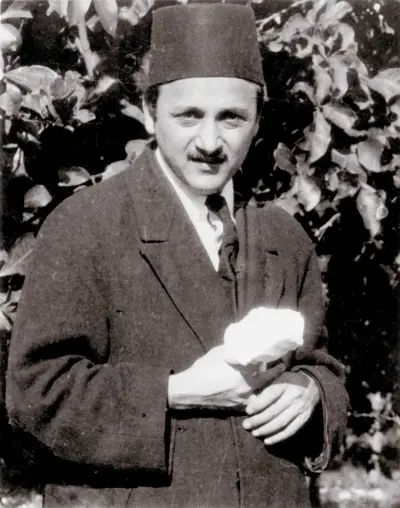
Shoghí Effendí was the grandson and successor of ʻAbdu'l-Bahá, appointed to the role of Guardian of the Baháʼí Faith from 1921 until his death in 1957. Shoghi Effendi created a series of teaching plans that oversaw the expansion of the faith to many new countries. He also translated and provided authoritative interpretation of many of the writings of the Baháʼí central figures. He was succeeded by an interim arrangement of the Hands of the Cause until the election of the Universal House of Justice in 1963.
