Joseph Butler Quotes
Consequently it will often happen there will be a desire of particular objects, in cases where they cannot be obtained without manifest injury to others.
Butler, Joseph. Fifteen Sermons Preached at the Rolls Chapel. J. and J. Knapton, 1726.


This view of the world as a zero sum game and the contrasting view of growth producing a win-win situation define the major contrasting political and economic views argued to this day.


President Theodore Roosevelt referred to the same groups similarly. See {638453} and {639956}.


This question has been used throughout history to determine the responsibility of men and nations as well as assess policies and legislation.


He was referring to the arch conservative isolationists who did not want to spend any Federal money to strengthen the armed forces and their weaponry.

In 1811 Calhoun was a freshman congressman. Congress was considering raising 10,000 men to resist the encroachments of Great Britain. The large cost of the enterprise was preventing the measure from passing. Calhoun objected to considering the cost factor at all:


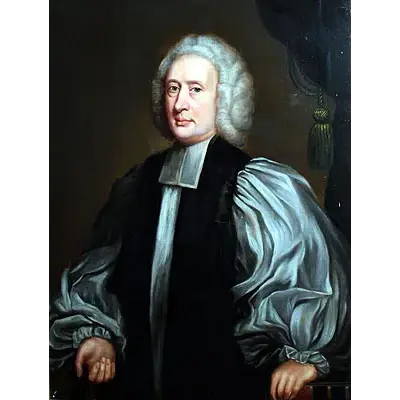
Joseph Butler was an English Anglican bishop, theologian, apologist, and philosopher. He was born in Wantage in the English county of Berkshire (now Oxfordshire). He is known, among other things, for his critique of Deism, Thomas Hobbes's egoism, and John Locke's theory of personal identity. Butler influenced many philosophers and religious thinkers, including David Hume, Thomas Reid, Adam Smith, Henry Sidgwick, John Henry Newman, and C. D. Broad, and is widely considered "as one of the preeminent English moralists." He also played an important, though under appreciated, role in the development of eighteenth-century economic discourse, greatly influencing the Dean of Gloucester and political economist Josiah Tucker.
