Kimberley Strassel Quotes
Congressional sloth in recent years has hit mind-boggling new lows. It’s partly systemic, rooted in a mandatory spending regime that accounts for two-thirds of government dollars and runs on autopilot. That disconnect now imbues every aspect of governance. In the nearly 50 years since Congress created our current system of budgeting and appropriations, it’s managed to complete the process correctly four times. It last did so 25 years ago. The default is massive omnibus bills that are passed hours after release, minutes before the government shuts down for lack of funds.


Both the House and the Senate, as they got larger, developed an Appropriations Committee. When the committee assessed a departmental appropriation, they had also the responsibility for all the other departmental budgets. However, many of the members of the Appropriations Committee tended to favor the interests of their particular constituency or the special interests to which they were beholden. Other members had little or no influence. So there was immense pressure during Reconstruction to ‘share’ the appropriations ‘plum’ by creating appropriations subcommittees. However, each particular subcommittee loses the perspective of and interest in the budget as a whole. The process has led to budget imbalance pressure ever since. But Randall, the Speaker of the House warned about exactly what would happen. He had earlier served as Chairman of the Appropriations Committee, and he was exactly right.


The Republicans had, in the view of most Americans at the time, refused to pass the legislation to provide money for the government to function unless President Obama would cancel the Health Care Reform that was his major legislative achievement of his first term, and passed over the objections of most Republicans who claimed it was unconstitutional. Then the Supreme Court upheld the Constitutionality of Obamacare, and the Tea Party Republicans pressured the regular republicans to shut down the entire government until the President relented and cancelled his own legislation. The American people resented this unprecedented of interfering with the Constitutional methods by which laws are passed, and after over a week of taxpayer additional costs for less service, the regular Republicans made a deal with the Democrats and produced a majority to reopen the Government.


Roosevelt understood the value of symbols in forming public perception, and vetoes are often used by presidents to create a symbolic message.

The Dutch King’s brother, Emperor Napoleon Bonaparte Bonaparte, insisted on Dutch contributions to his war effort in the way of Dutch troops, ships and provisions. Yet there was not enough possible revenue to pay for such a war effort.

This was a subtle criticism of the Presidential Candidate Donald Trump whose only experience was in real estate development, reality TV, and promotion. This was in contrast to his opponent Hillary Clinton who had had vast experience at many roles and levels of government.

In the non-defense side of the budget a very large proportion of the budget is for entitlements like Social Security and Mediacre which are obligations that must be paid. The remainder, the smaller part is everything else--funding the cabinet departments, all the medical and sdcientific research, all the federal aid to public dchools and police departments, all the welfare, foodstamp and other programs for the poor, the costs of the Federal COurt System, the White House, the Congress, the State Department, foreign aid, Homeland security, weatehr forcasting, all the agricultural programs, and viirtually everything the governmetn does. In 2017 President Donals Trump submitted a budget to COngress that increased defense spending by a fulll 10 percent, and gave a hugh tax cut for the wealthy and the corporations. To balance the budget, he propsoed eliminateing man of the existing progrms like "Meals on Wheels" which brings at least 1 hot meal a day to homebound poor eldertly people, and a host of other critical programs. He had no previous experience with a government budget which was thoudands of times larger and more complex than any budget he had ever seen. So many in Congress, in both partiesd, were very critical of the budget and Congress then started to create its own buget. This quote expressed the heart of the problem.


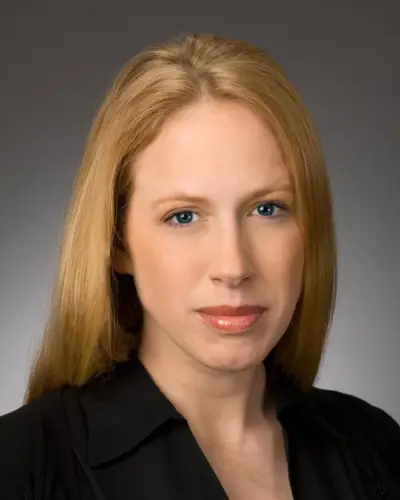
Kimberley Ann Strassel (born July 24, 1972) is an American conservative[1] columnist and author who is a member of the Wall Street Journal editorial board. She writes a weekly column, "Potomac Watch", which appears on Fridays.
