Robert M. Gates Quotes
Congress is best viewed from a distance—the farther the better—because up close, it is truly ugly. I saw most of Congress as uncivil, incompetent at fulfilling their basic constitutional responsibilities (such as timely appropriations), micromanagerial, parochial, hypocritical, egotistical, thin-skinned and prone to put self (and re-election) before country.
Gates, Robert M. Duty: Memoirs of a Secretary at War. Alfred A. Knopf, 2014.


With its multiplicity of committees and the polarization of the parties, Congress has been unable to legislate on large, comprehensive problems that involve more than a single issue at a time.


A minority of newly elected ultra conservative Tea Party Republicans intimidated most of the main line Republicans by threatening to run against them in their primary elections. The result was that almost no legislation was passed and there was a constant drumbeat of attacks against anything the government was doing or might do in the future. Public confidence in government was driven very low, with only the public confidence in Congress lower. The Democrats who could accomplish very little in that circumstance became very unpopular while the Republicans were even more so. However, many Tea Party Republicans viewed that as a victory as their major objective is to enfeeble government—especially the Federal government.


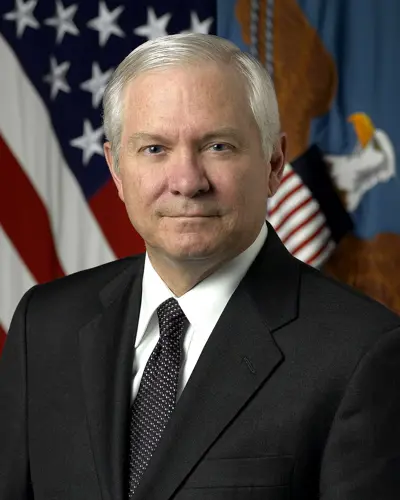
Robert Michael Gates is an American intelligence analyst, and university president who served as the 22nd United States secretary of defense from 2006 to 2011. He was originally appointed by President George W. Bush and was retained for service by President Barack Obama. Gates began his career serving as an officer in the United States Air Force but was quickly recruited by the Central Intelligence Agency (CIA). Gates served for 26 years in the CIA and the National Security Council, and was Director of Central Intelligence under President George H. W. Bush. After leaving the CIA, Gates became president of Texas A&M University and was a member of several corporate boards. Gates served as a member of the Iraq Study Group, the bipartisan commission co-chaired by James A. Baker III and Lee H. Hamilton, that studied the lessons of the Iraq War.
