Tryon Edwards Quotes
Compromise is but the sacrifice of one right or good in the hope of retaining another - too often ending in the loss of both.
Edwards, Tryon. A Dictionary of Thoughts. Cassell Publishing Company, 1891, p. 86.


As the Majority Leader of the House, Eric Cantor had to resolve conflicts and for coalitions that will compromise to get anything done. However, the Tea Party movement didn’t want any compromises even if it meant shutting down the government and defaulting on the national debt. They ran against conservative Republicans in the Republican primary elections campaigning that the incumbent made and facilitated compromises with Democrats. In some districts like Eric Cantor’s there were enough primary voters who agreed. Terry was explaining the message that the other conservative politicians received.


Some politicians tell their constituents that they compromise but not on principles. This is illusory and often disingenuous as well. In a democracy there are many sets of principles that conflict with others just as deeply and frequently held. Even many of the principles of the U. S. Constitution conflict with other constitutional principles. If politicians never compromised on principles and ideals, there would be no operational government unless it were a theocracy or a dictatorship where there were only one set of principles in the society. The more democratic a society is the more its politicians must compromise with their fundamental principles and ideals.


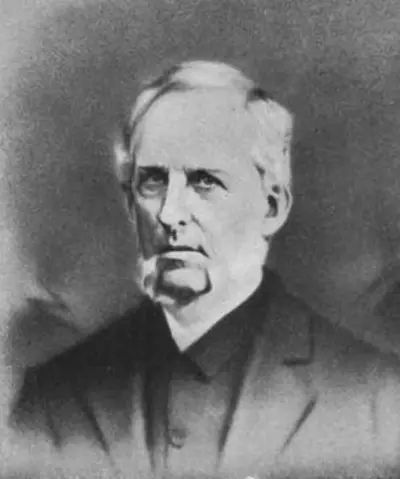
Tryon Edwards was an American theologian, minister of the Second Congregational Church in New London, Connecticut, from 1845-1857, after having served in Rochester, New York. He was best known for his collection of quotations, A Dictionary of Thoughts, a book of quotations, for his compilation of the sixteen sermons of his great grandfather, Jonathan Edwards, on 1 Corinthians 13 as Charity And Its Fruits; Christian love as manifested in the heart and life, and for his edition of the works of his grandfather, Jonathan Edwards (the younger) (in 1842).
