Andrew Grove Quotes
Competition is warfare. Mostly it is played by prescribed rules--there is a sort of Geneva Convention for competition--but it's thorough and often brutal.
Grove, Andrew S. Only the Paranoid Survive: How to Exploit the Crisis Points That Challenge Every Company. Currency Doubleday, 1996.


While this was a common attitude for years before, the horrors of World War II produced a general revulsion to war and an awareness that war between two nations spills over to other states in the region and in an era of globalization, effects countries in other parts of the world. So there has been a tendency to use diplomacy endlessly, even after "things have gone too far". Historically, when things reached that point, the parties did fight it out, and when one was weakened sufficiently, negotiations and diplomacy could then be fruitful.

The Democrats used this quotation during the 1964 presidential campaign, in a famous TV ad with a little girl, a mushroom cloud and the announcer quoting Goldwater.


1000 Spanish prisoners of war were over a 4 day period beheaded. This infamous order has been a black mark on his general democratic and humane public life. Some apologists for his war crimes point out that the Spaniards were making an all-out assault on his revolutionary troops who were very badly outnumbered. It took many revolutionary solders to guard the prisoners and if Bolivar lost the upcoming battle, it would have been the end of his revolution and Spain might still be in control of much of South America. With the additional soldiers freed up from guard duty, Bolivar barely survived the battle and the Revolution was not crushed.


Although warmly greeted, he was pressed for immediate action. see {638533}.


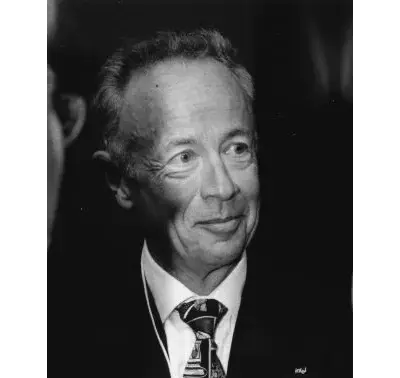
Andrew Stephen Grove was a Hungarian-American businessman, engineer, and CEO of Intel Corporation. He escaped from Communist-controlled Hungary at the age of 20 and moved to the United States, where he finished his education. He was the third employee and eventual third CEO of Intel, transforming the company into the world's largest semiconductor company.
