Paul Samuelson Quotes
Companies are not charitable enterprises: They hire workers to make profits. In the United States, this logic still works. In Europe, it hardly does.
Samuelson, Paul A. Syndicated Column. Tribune Media Services, 1999.


The socialist extremists wanted the state to own all the major businesses which would be operated without a profit allowing more money to be paid to the workers without any price increase for the consumer. Yet, many of them wanted the innovation and other virtues of the private sector and few were ready to take on the political chaos that would be involved in eliminating private ownership of businesses. Crosland forced them to logically accept the concept of profits as desirable for the society.


There are some conservative economists and businessmen who believe that it is desirable to have some unemployment as a bulwark against inflation. If there are people without jobs, they will hold the general wage rates down.


Many of the far left grew disillusioned with the British Labor Movement and how it was relating to the capitalist companies, the government, and the workers. The Unions had become very undemocratic and controlling with the government pressuring both labor and companies to the degree that many felt that the institutions themselves were no longer free institutions. Ironically, they preferred the open competition of the American system at the time where unions and companies were free to fight out their differences.

This was an honest theoretical belief of Mises. However, most of the criticism of capitalism in the industrial democracies is precisely the lack of unemployment and sustenance for all. When it does, even complaints about inequality tend to be minimal. But some capitalist societies never provided these, and by the 21st century, no capitalist nation was able to do so permanently without recessions and depressions.


One hundred years later, many in America would come to this same conclusion and American manufacturing, to outcompete China and other Oriental cultures, have turned to highly complex, constantly innovative, and technically advanced processes.


Niles, a Southern editor was none the less anti-slavery. Other than the gross immorality of slavery, he saw that the economics of the institution actually inhibited the economic development of the South very early. Efficiency of machinery and organization of work and labor saving inventions were not as badly needed in a slave economy where human labor was so inexpensive. While in the North and most of Europe, there was skilled, but expensive, labor of freemen. This motivated all to improve processes and technology and increase productivity. There was much less motivation in the South and the slaves who actually understood the work had no way to experiment and were not allowed to read or write so the South was almost economically and technologically stagnant in comparison to the free labor states.

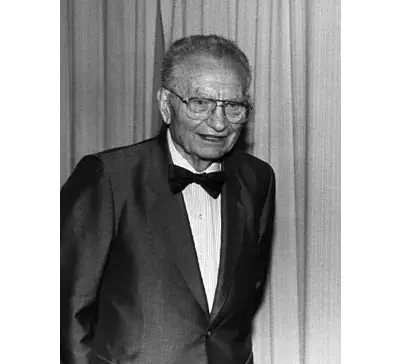
Paul Anthony Samuelson (May 15, 1915 – December 13, 2009) was an American economist who was the first American to win the Nobel Memorial Prize in Economic Sciences. When awarding the prize in 1970, the Swedish Royal Academies stated that he "has done more than any other contemporary economist to raise the level of scientific analysis in economic theory". Economic historian Randall E. Parker has called him the "Father of Modern Economics", and The New York Times considers him to be the "foremost academic economist of the 20th century".
