Benjamin Wittes Quotes
Comey really spent an enormous amount of energy in the period in which both he and Trump were in office trying to protect the FBI from political interference from the White House.
Wittes, Benjamin. Interview by Judy Woodruff. PBS NewsHour, PBS, 9 May 2017.


Since Theodore Roosevelt, the Presidency has become stronger and Congress weaker. The original idea of the framers of the Constitution was to have three co-equal branches of government. However Gingrich was so partisan on this point that he lost most of his credibility and lost his position of leadership in the House. He was constantly asserting the power of the House against Democratic President Bill Clinton while he never had when Republican George W. Bush was President. His house impeached President Clinton on charges emanating from Clinton’s sexual foibles and effort to keep his predilections secret. This not only impeded government for a long time, but angered the public. In the end the Republican Controlled House could not even get a majority of the Republican controlled Senate to vote against Clinton, much less the super-majority the rules required. Ironically, by the second term of George W. Bush’s administration most members of Congress and the American public had thought the Presidency had gotten to powerful relative to Congress and Gingrich’s objective became a national one, but Gingrich himself had been discredited and was completely out of office.


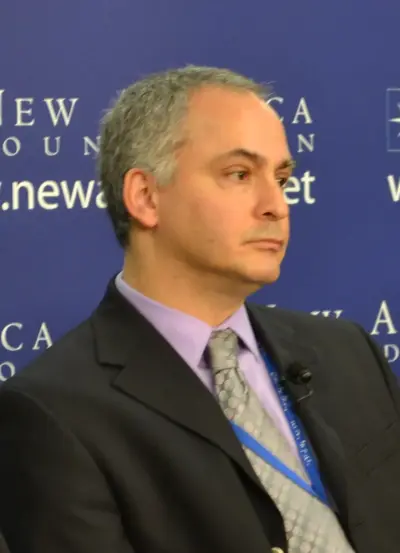
Benjamin Wittes is an American legal journalist and Senior Fellow in Governance Studies at the Brookings Institution, where he is the Research Director in Public Law, and Co-Director of the Harvard Law School–Brookings Project on Law and Security. He works principally on issues related to American law and national security. Along with Robert M. Chesney and Jack Goldsmith, Wittes cofounded the Lawfare Blog. Wittes is also a member of the Hoover Institution's Task Force on National Security and Law. Wittes is a frequent speaker on topics of detention, interrogation, and national security, before academic, government, policy, and military audiences. He also co-hosts the Rational Security podcast.
