Constance Baker Motley Quotes
Columbia Law School men were being drafted, and suddenly women who had done well in college were considered acceptable candidates for the vacant seats.
Motley, Constance Baker. Equal Justice Under Law: An Autobiography. Farrar, Straus and Giroux, 1998.


Puglia was an anti feminist. The stoa was the city square where men commonly congregated and discussed politicis.

Mrs. Thatcher was not a fan of feminists because so many of them were also liberal in their politics. However, she herself and her life example was one of the great feminist statements of the 20th century. She also held a disrespect for men that was typical of the most ardent feminists.

She was responding to one of the leading theater impresarios of the time who stated that women could not be great playwrights—see {636787}.


The memo was in reaction to the efforts of Phoebe W. Couzins to enter the law school of the university. Two years later, Washington University of St. Louis became the first university in America to adopt a policy allowing female students.


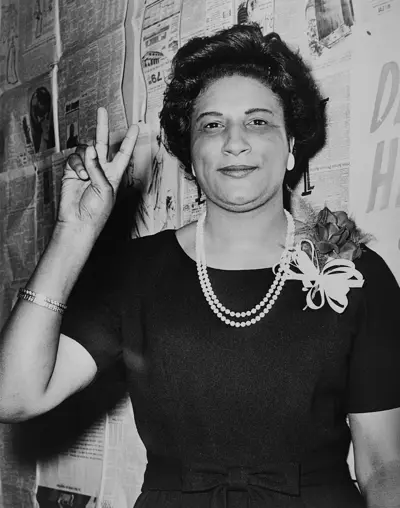
Constance Baker Motley, was a key strategist of the civil rights movement, lawyer, judge, state senator, and Borough President of Manhattan, New York City. She obtained a role with the NAACP Legal Defense and Educational Fund before entering law school as a staff attorney and continued her work with the organization for more than twenty years. She argued 12 landmark civil rights cases in front of the Supreme Court, winning nine. She was a law clerk to Thurgood Marshall, aiding him in the case Brown v. Board of Education. Baker Motley was also the first African-American woman appointed to the federal judiciary, serving as a United States District Judge of the United States District Court for the Southern District of New York. Judge Motley died on September 28, 2005 in New York City of congestive heart failure.
