Douglas Coupland Quotes
Cloning is great. If God made the original, then making copies should be fine.
Coupland, Douglas. Microserfs. HarperCollins, 1995.


Freedman was the producer and narrator of a TV series on sophisticated topics of science. There are a number of jurisdictions in the world where it is not a crime to clone a human being. Once someone implants a clone into a human female, there is little society can do little to “prevent” the clone from being born. Many religious fundamentalists who oppose human cloning will fight to protect the life of the clone baby in utero. For all we know, clones have already been born and are attending school with other children as no one could easily tell that a child (or an adult) is a clone.

He had successfully cloned dogs, cats, sheep and an entire herd of cattle, and is one of the most advanced cloning scientists in the world.


Kass was appointed for his religious, anti abortion views and he is an excellent proponent of one perspective. There are others who do not necessarily see human cloning in such a dark light. Although, the process has to be developed, at some time it well might be a mode by which infertile people could have children. Kass’s criticisms were made by others when in vitro fertilization techniques were being developed.


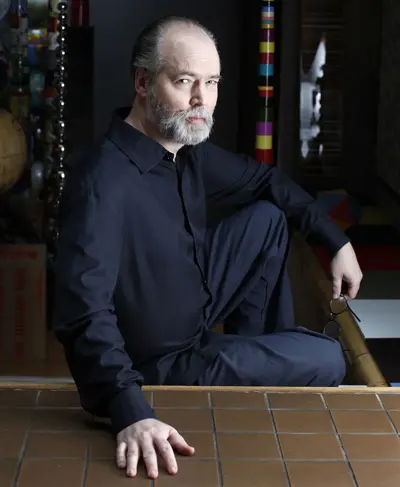
Douglas Coupland OC OBC (born 1961) is a Canadian novelist and artist. His fiction is complemented by recognized works in design and visual art arising from his early formal training. His first novel, the 1991 international bestseller Generation X: Tales for an Accelerated Culture, popularized the term such as McJob. He has published thirteen novels, two collections of short stories, seven non-fiction books, and a number of dramatic works and screenplays for film and television. He is a columnist for Financial Times. He is also a frequent contributor to The New York Times, e-flux journal, Dis, and Vice. His art exhibits include Everywhere Is Anywhere Is Anything Is Everything which was exhibited at the Vancouver Art Gallery, and the Royal Ontario Museum and the Museum of Contemporary Canadian Art, (now the Museum of Contemporary Art Toronto) and Bit Rot at Rotterdam's Witte de With Center for Contemporary Art and the Villa Stuck.
