Richard Nixon Quotes
Clean air, clean water, open spaces - these should once again be the birthright of every American.
Nixon, Richard. "State of the Union Address." January 22, 1970. Public Papers of the Presidents of the United States: Richard Nixon, 1970, U.S. Government Printing Office, 1971, p. 13.


1st Earl of Beaconsfield. In the United States, President Theodore Roosevelt shocked the major business interests when he proposed regulating food and other government quality assurance of the private marketplace. Many Americans saw this as an overdue reform. One of the reasons was that Prime Minister Disraeli had advocated government regulation a quarter of a century earlier with statements like this quotation.

This is a fascinating quotation in that Cooper was a strong patriot of the American system. Today, this statement would be considered un-American and communistic. The notion that each person had a right to a share of land ownership. America changed in this respect. In Cooper’s day, there was so much land and so few people that it was part of the American concept that each man should have land. (Free men and not slaves of course). But as the population grew, speculators realized that there was opportunity and today in America ALL LAND is owned by people, corporations, other organizations and the government. The population is still growing and the potable water is in shorter and shorter supply. Already, we have to pay for water in much of the country. Perhaps in years to come, someone who argues that each person is entitled to clean air to breathe might be thought of as a radical communist.


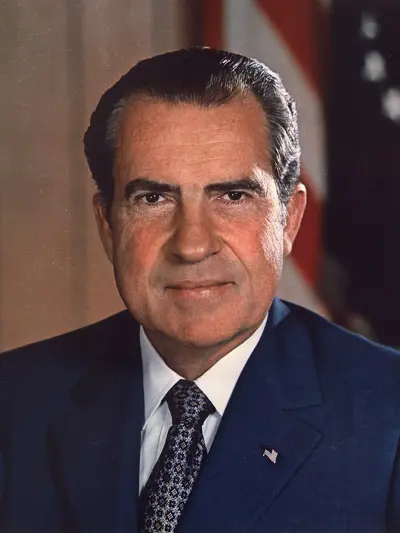
Richard Milhous Nixon was the 37th president of the United States, serving from 1969 to 1974. A member of the Republican Party, Nixon previously served as the 36th vice president from 1953 to 1961, having risen to national prominence as a representative and senator from California. After five years in the White House that saw the conclusion to the U.S. involvement in the Vietnam War, détente with the Soviet Union and China, and the establishment of the Environmental Protection Agency, he became the only president to resign from the office, following the Watergate scandal.
