Earl Warren Quotes
Citizenship is man's basic right for it is nothing less than the right to have rights. Remove this priceless possession and there remains a stateless person, disgraced and degraded in the eyes of his countrymen.
Earl Warren, 1891-1974, Chief Justice, U.S. Supreme Court, Governor of California (Republican), Republican Vice Presidential Candidate (with Dewey), Dissent, Perez v. Brownell, 1958
Sourced by: Eigen's Political and Historical Quotations

As a woman, Anthony was found guilty of “illegal voting” in the Presidential election of 1872. Fining her $100 the judge asked if she had anything to say. This was her reply.

This quotation was a slight paraphrase from Article 14 of the Republican Party Platform which had been adopted unanimously at the Chicago Party Convention on May 17, 1860. This was the convention where Lincoln was nominated. It is not known who originally drafted Article 14, although Lincoln's agents were very active in the platform drafting process. In his later campaign speech, Lincoln ran on the Party Platform.


Note the use of the phrase “against the government.” One of the unique aspects of the American Constitution and The Bill of Rights is that the government is considered a potential and even probable infringer on the liberties of the people. It is almost as though the government was the potential enemy. Modern libertarians state this very explicitly and it is ever present in the views of both the right and left wings of American politics. Most centrists recoil at the thought that some citizens see the government as the enemy, but even in America there have been times where the government has infringed on the rights of citizens only to have the courts or future administrations and Congresses correct the error.


When the slaves were emancipated, they were free but they were no yet citizens with civil and political rights either. They had no land or other property and racial discrimination in the ex-slave states was vicious and rampant.

See {587703} for a similar statement by a Supreme Court Justice.


Urging Black military participation for the Union in the Civil War:


This quotation has been used by gay rights advocates. Opponents argue that a gay lifestyle is not “innocent” in that it is Biblically prohibited. This brings the issue of separation of church and state into the argument.
Jefferson and some of the other Founding Fathers saw the American experiment as having implications for the whole world. To Jefferson, the Declaration of Independence was not just for Americans but ideally for all mankind.


Hayward claimed that Wilson was the first American President who ever criticized the American Constitution. Many do not agree as Madison and Jefferson in part, along with most other Americans, found the Constitution so wanting that it was ratified only on condition of the passage of the Bill of Rights. Jackson, was distressed by the limitations on the President and many others had their objections, but Wilson, before he became a politician was a prominent academic political scientist and wrote voluminously and had an intellectual following so his criticism was not considered so “political” as others.

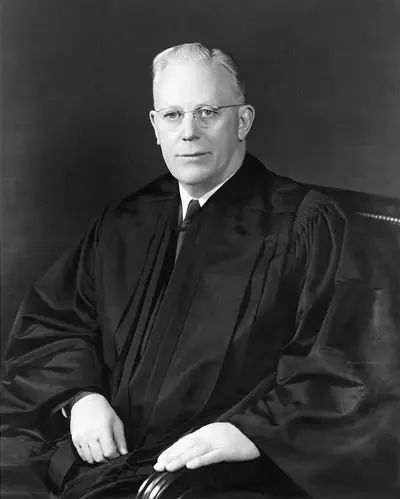
Earl Warren was an American politician and jurist who served as 30th governor of California from 1943 to 1953 and Chief Justice of the United States from 1953 to 1969. The "Warren Court" presided over a major shift in American constitutional jurisprudence, which has been recognized by many as a "Constitutional Revolution" in the liberal direction, with Warren writing the majority opinions in landmark cases such as Brown v. Board of Education (1954), Reynolds v. Sims (1964), Miranda v. Arizona (1966) and Loving v. Virginia (1967). Warren also led the Warren Commission, a presidential commission that investigated the 1963 assassination of President John F. Kennedy. He is the last chief justice to have served in an elected office before entering the Supreme Court, and is generally considered to be one of the most influential Supreme Court justices and political leaders in the history of the United States.
