Giuseppe Mazzini Quotes
Without Country you have neither name, token, voice, nor rights, no admission as brothers into the fellowship of the Peoples.
Mazzini, Giuseppe. The Duties of Man and Other Essays. J.M. Dent & Sons, 1907, p. 53.


I was born here. My children were born here. What the hell do I have to do to be called an American?
A Boston newspaper referred to Kennedy as "an Irishman." Until the latter part of the 20th century, there was an ugly, anti-Irish dimension to the national scene that was every bit as ugly as the other ethnic hatreds like anti-Semitism. The Irish like the early Jews had six strikes against them. They were foreigners. They were not Christian Protestants, they were poor, they did not know the American culture, they spoke English with a distinct accent, and they were the lowest of the lower classes. Even rich Irish like Kennedy were looked down upon and when his son ran for President he had to overcome a still significant block of anti-Irish Americans.

France had been hit with repeated riots of Muslim and African French citizens and immigrants. Thousands of cars were burned, property damaged and violence of the protesters had injured and killed bystanders. The major complaint was that they were not really accepted as equals in French society. Chirac tried to calm the rioters and prevent a backlash. Although France was a pioneering country in acceptance and tolerance of people of different races and religions, there has always been a strong intolerant segment of French Society that were racist, anti-Semitic and Fascist leaning. Because of the French concept of equality, affirmative action was not legally possible in France so that there was heavy discrimination and even segregation in housing, schools, occupations, and socially. Further, one of the traditional expectations of all immigrants who become French is that they adopt the French language and culture. Like immigrants throughout the world at the end of the 20th century, French immigrants often wanted to maintain their own customs, culture and language—a practice which set them at odds even with otherwise nondiscriminatory Frenchmen and women.
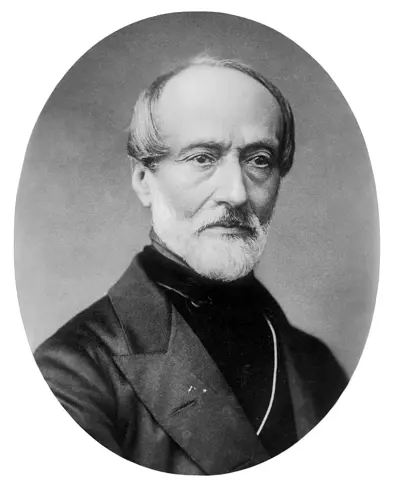
Giuseppe Mazzini was an Italian politician, journalist, activist for the unification of Italy and spearhead of the Italian revolutionary movement. His efforts helped bring about the independent and unified Italy in place of the several separate states, many dominated by foreign powers, that existed until the 19th century. An Italian nationalist in the historical radical tradition and a proponent of social-democratic republicanism, Mazzini helped define the modern European movement for popular democracy in a republican state.
