DeWitt Clinton Quotes
Charges so unfounded are beneath the dignity of refutation; and the country which has been called the land of swamps, of yellow fever, and universal suffrage, requires no advocate but truth, and no friend but justice, to place it on the highest elevation of triumphant vindication.
Many people in Europe looked down on America and perceived it as a primitive, uncivilized place that was a huge swamp and that Yellow Fever was rampant. The swamp and Yellow Fever accusations were not exactly untrue. However, there was much more to the Colonies than the critics claimed as history would prove. Note that universal suffrage—allowing all men to vote regardless of wealth—was considered as bad as Yellow Fever and swamps by the aristocratic Europeans of the time. Many Americans had something of an inferiority complex as a result of European attitudes about the United States, but not Clinton.
DeWitt Clinton, 1769-1828, Vice President of the United States (NY), U. S. Senator (Anti-Federalist Republican, NY), Mayor of New York City, Governor of New York, Peace Party candidate for President of the United States, “Father of Free Public Schools", Speech to the Columbia University Alumni, May 1827
Sourced by: Eigen's Political and Historical Quotations


He was the Russian Reformer who ended serfdom and gave land to the peasants and then was assassinated for his liberality


Muir was advocating extending the vote to male, non-land owners. He was convicted, sent to the Botany Bay prison colony in Australia, escaped to France, and his cause did later triumph.


Lincoln was referring to the "house divided against itself" speech. His remarks were addressed to friends who were trying to dissuade him from delivering the address.

Although a member of the Prime Minister’s party and Cabinet, Cooper was so outraged that he called for Chamberlain’s resignation leading to Winston Churchill becoming Prime Minister.


This quotation is the root of a great dilemma for all politicians who are attacked on a personal level. Most slanders are soon forgotten. The politician who reacts and publicly counters the slander inevitably does two things. More people become aware of the slanderous charges then there is a public battle over it, and the media tend to report the contest and hence the slanderous charge for a longer period of time than if it were uncontested. However sometimes the undefended charge is perceived as being true especially if it is a major charge. If the politician does not defend, the charge can get accepted and damage the politician’s standing. In the Kerry-Bush Prudential campaign, Kerry had the edge until the so-called Swiftboat Veterans made up a fictitious tale of Kerry, a decorated war hero, being a coward in the Vietnam war. Kerry thought the charge so preposterous that he didn’t bother to defend it. His lack of reaction was taken by much of the public as his admission of the charge. Kerry’s hero image was destroyed by a large enough proportion of the electorate that the electoral votes shifted to Bush, even though Kerry had the most votes by far. For each politician, the decision must be made for each charge and there is no clear way to know in advance which is the better strategy when a false charge is made.


Comey was objecting to the firing of several Assistant Attorneys General whom he thought were victims of parisanship.


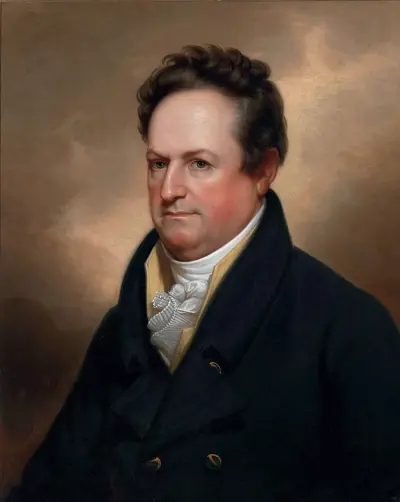
DeWitt Clinton, whose name was almost always spelled De Witt during his lifetime and until the late 20th century, was an American politician and naturalist. He served as a United States Senator, Mayor of New York City, and as the sixth Governor of New York. In this last capacity, he was largely responsible for the construction of the Erie Canal. Clinton was a major candidate for the American presidency in the election of 1812, challenging incumbent James Madison.
