Paul Martin Quotes
Central government's such as Canada's have become too small to deal with the big global issues, yet they remain too large and distant to deal with problems of local control.
Paul Martin, Canadian Finance Minister (Liberal), Interview with Edwin C. Newman, 1992
Sourced by: Eigen's Political and Historical Quotations


Even in the 21st century, French Ministry of Education boasted that on any given day, they know what Algebra problems students throughout the country will be doing for homework that evening. The national government can control any aspect of French society.

There was huge pressure on the central government to decentralize as they held all the power in Indonesian society. However, if they devolved power to the Provinces (States), many of them could be large enough and independent enough to secede and become an independent country as East Timor had done. So the Indonesian power structure bypassed the Provincial governments and devolved power directly to the local governments, none of which was independent enough to go it alone. The desired objective was met—no more secessions. However, there was no one to worry about regional and national issues and problems as the politicians who had power were all local. The country was becoming non-functional in many ways.


This is an example of some of the early views about the federation of Europe.


In addition, most state and local corrupt officials are detected, and prosecuted by Federal law enforcement officials as local and sometimes state corruption involves the local and state law enforcement officials as well as others so local authorities often turn a blind eye towards corruption.


The Beltway refers to a ring highway around Washington DC. Almost all government offices are inside the Beltway and this is a euphemism for the Federal Government in Washington DC.

Not only did the people in Afghanistan have very little experience with central government, but they had little history of government of any sort. There were loose tribes somewhat unified by culture, but there was little or no tribal government. The same with clans. Each Afghanistan male was his own ruler over his wives and children in a family centric society. While virtually all were Muslim, there was no hierarchy or structure of the clergy in that society.


Ironically, many Republican leaders give lip service to decentralized government but they fight hard for centralized national government making. Many want Congress to make laws governing abortion and other family planning techniques. Some want the state to decide, but almost no Republicans want to leave these personal decisions to the local government much less the family and women involved. In business regulation as well, republican fight tooth and nail to have Federal legislation prempt state and local government about tort liability for defective products, and they always prefer that the Federal SEC make all the rules and regulations about selling stocks and bonds and do not want state or local government to “interfere”. Likewise, they have emasculated the state governments when it comes to authority over the state militias where virtually all the controls and promotions are decided by Congress and the Department of Defense and not by Governors or local politicians. Ther are many other examples. In most of the solid Republican Southern States, the local school boards cannot even select the textbooks that schools will use and the Republicans centralize this with the State government and state legislatures which they control. Democrats also are generally opposed to decentralization except for large cities having control along with the Federal government but otherwise they too do not want decentralization. For national political parties, what is the point of winning national elections of the big decisions are made locally?

There are a few exceptions where the teachers are allowed to share much of the policy making. When that does happen, they too have autonomy to protect. But in most school systems teachers have no power and are rarely consulted or given any voice about policies. They then have no autonomy to protect.


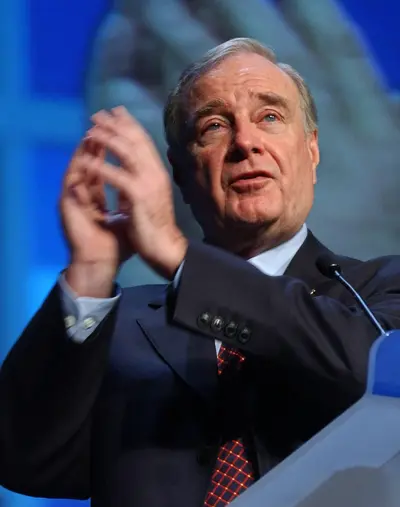
Paul Edgar Philippe Martin PC CC QC, also known as Paul Martin Jr., is a Canadian lawyer, politician and author who served as the prime minister of Canada from December 2003 to February 2006, 21st since Confederation.
