Jose Saramago Quotes
Can you imagine what Bush would say if someone like Hugo Chavez asked him for a little piece of land to install a military base, and he only wanted to plant a Venezuelan flag there?
Saramago, José. "José Saramago." Interview by David Barsamian. The Progressive, vol. 68, no. 12, Dec. 2004, p. 38.


This is the kind of threat that was used by Germany before the First World War. It worked with Turkey, but King Albert realized that being an “ally” of Germany meant losing independence anyway. Belgium would not join Germany, so the Germans invaded Belgium in 1914. Belgians fought with the allies and at the end of WWI, they were able to rebuild their independent state and thrive until they were again invaded by Germany in WWII. Turkey, in contrast, lost their entire empire, as a result of their fighting as German allies in WWI.

At the time our strongest allies in the Middle East were Monarchies, dictatorships, and Principalities. See {586706}

In 1884 Germany had become active in its colonization and outmaneuvered England in taking over Cameroon. Then Germany showed some interest in a part of New Guinea. The English resisted, not for any geopolitical reasons but because the British leaders did not want to be bested by Bismarck.

The Mexicans had to agree to whatever terms the United States demanded. President Polk wanted to annex California and the New Mexico territory (included Arizona) as well as other territory including Baja—a territory much larger than Western Europe. Trist watered down the demand and only included California and the New Mexico territory.


At the time, Palestine was technically Turkish territory. Turkey was one of the defeated axis powers in World War I. England, as part of the World War I peace treaties, had control over Palestine as well as most of the rest of the Middle East.


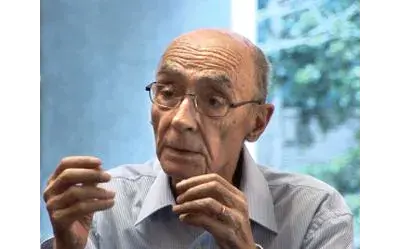
José de Sousa Saramago, GColSE, was a Portuguese writer and recipient of the 1998 Nobel Prize in Literature. His works, some of which can be seen as allegories, commonly present subversive perspectives on historic events, emphasizing the theopoetic human factor. In 2003 Harold Bloom described Saramago as "the most gifted novelist alive in the world today" and in 2010 said he considers Saramago to be "a permanent part of the Western canon", while James Wood praises "the distinctive tone to his fiction because he narrates his novels as if he were someone both wise and ignorant." Bloom and Saramago met when Saramago presented Bloom with an honorary degree from the University of Coimbra; according to Bloom: "A warm acquaintanceship ensued, marked by an exegetical disagreement concerning The Gospel According to Jesus Christ, which continued in correspondence and at a later meeting in New York City".
