Ezra Taft Benson Quotes
By deriving it's just powers from the governed, government becomes primarily a mechanism for defense against bodily harm, theft, and involuntary servitude. It cannot claim the power to redistribute money or property nor to force reluctant citizens to perform acts of charity against their will. Government is created by the people. No individual possesses the power to take another's wealth or to force others to do good, so no government has the the right to do such things either. The creature cannot exceed the creator.
Benson, Ezra Taft. The Proper Role of Government. Deseret Book Co., 1968, p. 6.


See also Gerald R. Ford for a later similar expression.


To the pro-slavery politician, abolition was an abdication of government to fulfill it’s 3 major responsibilities. Slaves were private property and government had to safeguard the owner’s right to own that property. Slave owners had always been free in America to hold slaves, and abolition impinged on that freedom. And the slavery advocates knew better than the abolitionists how cruelly the slaves had been treated. They reasoned—that if anyone had treated them that way, they would if they could take revenge and kill the slave owners. Therefore, abolition threatened the lives of Southern citizens. Of course, Brown and his fellow slave-owners did not consider the fact that they had interfered with the right of the slave to own property, they denied him freedom, and in many cases killed slaves as examples or out of neglect. Their “logic” was that slaves were not citizens and therefor were not entitled to these protection.


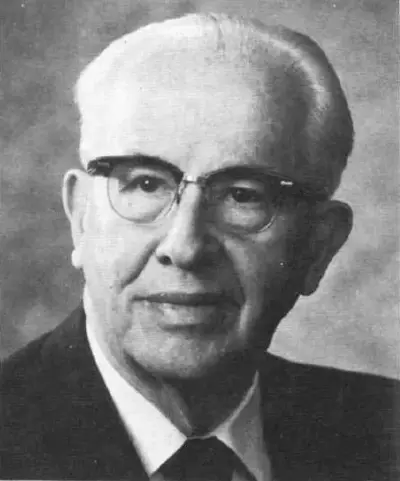
Ezra Taft Benson was an American farmer, government official, and religious leader who served as the 15th United States Secretary of Agriculture during both presidential terms of Dwight D. Eisenhower and as the 13th president of The Church of Jesus Christ of Latter-day Saints (LDS Church) from 1985 until his death in 1994.
