Friedrich Nietzsche Quotes
But this word will I say to my enemies: What is all manslaughter in comparison with what you have done to me!
Nietzsche, Friedrich. Thus Spoke Zarathustra. Translated by Thomas Common, The Macmillan Company, 1911, p. 131.


This statement was published in a major magazine of the time. It referred to a notorious lynching in the South where the victim had been brutally tortured and burned to death. In this case the victim had apparently committed a horrible crime. The Bishop condemned the horrific nature or the lynching but took the view that it was an act of insanity and that the relatives of the child killed by the lynching victim may well have been driven to insanity by the act However, this lynching, like most all in the South was not just an act of vengeance—insane or not—by relatives of a victim, it was participated on by a large mob, many of whom had no relationship to any of the parties. Whites who committed horrible crimes were rarely lynched, but many accused Blacks were lynched even though they turned out to have been innocent.


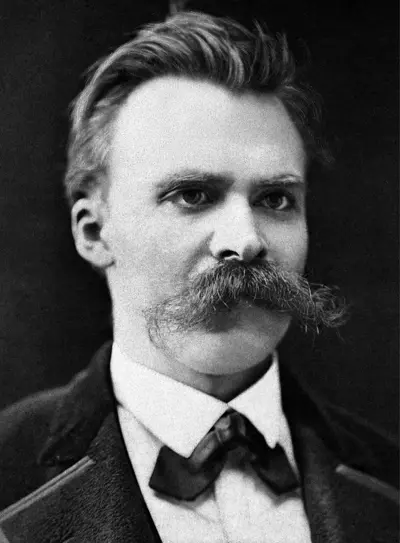
Friedrich Wilhelm Nietzsche was a German philosopher, cultural critic, composer, poet, writer, and philologist whose work has exerted a profound influence on modern intellectual history. He began his career as a classical philologist before turning to philosophy. He became the youngest person ever to hold the Chair of Classical Philology at the University of Basel in 1869 at the age of 24. Nietzsche resigned in 1879 due to health problems that plagued him most of his life; he completed much of his core writing in the following decade. In 1889, at age 44, he suffered a collapse and afterward a complete loss of his mental faculties. He lived his remaining years in the care of his mother until her death in 1897 and then with his sister Elisabeth Förster-Nietzsche. Nietzsche died in 1900.
