Roger Cotes Quotes
But shall gravity be therefore called an occult cause, and thrown out of philosophy, because the cause of gravity is occult and not yet discovered? Those who affirm this, should be careful not to fall into an absurdity that may overturn the foundations of all philosophy. For causes usually proceed in a continued chain from those that are more compounded to those that are more simple; when we are arrived at the most simple cause we can go no farther ... These most simple causes will you then call occult and reject them? Then you must reject those that immediately depend on them.
Historically, man has reacted to phenomena whose causes were not understood in one of two diametrically opposed ways. Some of these are attributed to God or the Gods of the culture. Others were associated with the occult, the world of demons and the Devil. In this case, when Newton published his great work, he had no explanation of the cause of gravity. There were some who accused him of delving into the occult. Ironically, Newton himself was heavily into the occult—one of the puzzles about a great mind. The cause of gravity did not begin to be understood until the Higgs Boson was proven to exist in 2012 with the Super Hadron Collider.
Roger Cotes, 1682-1716, British mathematician and astronomer, Editor of the second edition of Newton's Principia, Mathematical Principles, 1729
Sourced by: Eigen's Political and Historical Quotations


There has been a suspicion and distrust of scientist by the general population in almost all societies throughout human history. Dewey thought America was entering a new intellectual enlightenment and there was an improvement for a short time, but scientists then tended to come under two criticisms by the general public. One was the new “knowledge” they were claiming which not only contradicted much of general religious dogma, but change started coming so fast that people were told to reject that which only a few years earlier they were told to accept and vica versa. At the same time, some groups in society began to be distrustful of scientists because they did not appear to be controllable by the means and methods of the rest of the society and were viewed as “loose cannons” who might not fit into democratic society in the manner that the leaders of society wanted. Both suspicions have existed since then.


Even learned men with some science background believed in witches.


Spinoza’s ideas were considered so radical and dangerous that he was the only man in history who was excommunicated by the Catholics, the Jews and the Muslims.


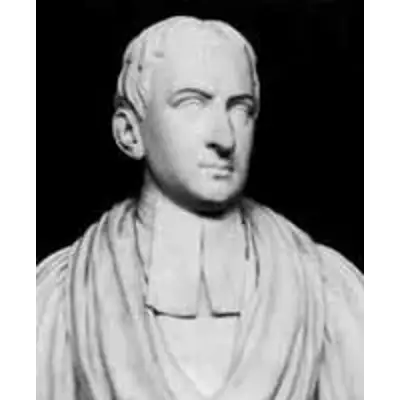
Roger Cotes FRS was an English mathematician, known for working closely with Isaac Newton by proofreading the second edition of his famous book, the Principia, before publication. He also invented the quadrature formulas known as Newton–Cotes formulas, and made a geometric argument that can be interpreted as a logarithmic version of Euler's formula. He was the first Plumian Professor at Cambridge University from 1707 until his death.
