Geoffrey Chaucer Quotes
But manly set the world on sixe and sevene; And, if thou deye a martir, go to hevene.
Chaucer, Geoffrey. The Riverside Chaucer. Edited by Larry D. Benson, 3rd ed., Houghton Mifflin, 1987, p. 547.


It is hard to believe that there are any people in the world that would try and educate youth in this manner, but it is common amongst the ultra fundamentalist Muslims to day. However, it is very similar to what the Christians, including the Pope, preached a millennium ago and what the Japanese preached to their young Kamakasi in WWII.


This for many suicide bombers provides much of the motivation and overcomes the prospect of suicide. According to Islamic doctrine, those killed in “the cause of Allah” go immediately to Paradise, unlike those who die a natural death. And when in Paradise, the males get 72 beautiful virgins.

These “benefits” as well as males getting 72 virgins are constantly told to young and impressionable Muslims, some of whom take it so literally that they become suicide bombers. They actually believe that blowing themselves up feels only like the sting of a mosquito. This sales pitch for suicide bombers and other martyrs is also effective because with the poor education, high unemployment, and few political and civil rights, most young Arab males have no other way of obtaining “honor, dignity, and respect.”
It was a custom for suicide bombers in the Middle East to write or video record last words to loved ones.


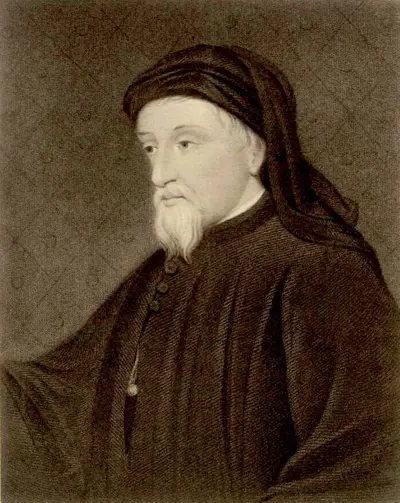
Geoffrey Chaucer was an English poet and author. Widely considered the greatest English poet of the Middle Ages, he is best known for The Canterbury Tales. He has been called the "father of English literature", or, alternatively, the "father of English poetry". He was the first writer to be buried in what has since come to be called Poets' Corner, in Westminster Abbey. Chaucer also gained fame as a philosopher and astronomer, composing the scientific A Treatise on the Astrolabe for his 10-year-old son Lewis. He maintained a career in the civil service as a bureaucrat, courtier, diplomat, and member of parliament.
