Zbigniew Brzezinski Quotes
But if Russia is to be part of this larger zone of peace it cannot bring into it its imperial baggage. It cannot bring into it a policy of genocide against the Chechens, and cannot kill journalists, and it cannot repress the mass media.
Brzezinski, Zbigniew. Second Chance: Three Presidents and the Crisis of American Superpower. Basic Books, 2007.

In 1936, Fascist Italy invaded Ethiopia in an effort to obtain an African colony like other European Countries had. Over 50 nations had promised aid to Ethiopia if attacked but then the Italian attacks came, it was not just soldiers with some small artillery and vehicles. Instead it was a full modern army with not only heavy artillery and tanks, but extensive use of air power against villages and towns which generally hardly had rifles. The airplane carnage of civilian populations was a shock to the world. However, the tactics were studied by the Italian German Fascist allies who further developed air power use against unarmed towns and cities in the Spanish Civil war. The aid promised to Christian Ethiopia never materialized because there was a worldwide depression and the great powers would have had to commit to major war—not just send some arms and ammunition. The Ethiopians mostly fought with spears and knives. The Fascists were thus emboldened for the invasion of Europe a few years later.


Wherever there has been a true free press, there have been anti-war activists who are particularly critical of the affect on civilians—collateral damage or otherwise.

The Arab armies of Egypt, Syria, Jordan and the PLO were preparing a coordinated attack on Israel. After statements like this, the Israeli’s preempted the attack, routed the Egyptian Airforce and Army, and then defeated the other three. The Arab “War of Liberation” resulted in the Arabs losing more with Israel tripling it’s control of area. The quotation however cast a pall over attempts thereafter to create a Palestinian State as in effect the PLO had announced a policy of a Holocaust—the extermination of the Israelis. The dispute over land was not for the Jewish state a land negotiation amenable to compromise and give and take, but instead was an existential threat to Israel whereby any compromise might result in the death of the entire population. As the ultimate intention of the PLO had been revealed.

Turkey, under the control of the triumvirate of the 3 Young Turks had massacred almost all of the Armenian population in the area claimed by Turkey. At the end of WWI, there were many demands that those who ordered the policy of a Turkish genocide and those who carried it out by brought to justice—tried and punished. The Sultan had done little if anything to stop the slaughters although he was very weak, Turkey under the Young Turks had also picked the wrong side and allied with the Germans. The Sultan and his Grand Vizier were trying to pick up the pieces and maintain the Ottoman Empire as best they could despite they the fact that they lost control of much of their vast territory. At the Paris Peace Conference, the Grand Vizier virtually admitted the crimes and committed the Turkish government to determining the guilty and bringing them to justice. He actually had 50 of the worst offenders arrested (See {620595}.). However, there were a few tried and one governor of a province was hanged and a few others received short jail sentences. Talaat, the worst of The Young Turks regarding the genocide, escaped to Germany. But he was tracked by a surviving Armenian who assassinated Talaat. The assassin was acquitted by a sympathetic German court which ruled that the extermination of the assassin’s family had been so traumatic that temporary insanity relieved the assassin of criminal responsibility.


The Ottoman Turks were slaughtering Armenians; the Russians had pogroms against the Jews, and the Blacks were being tortured or killed if they would not work for the Belgians in the Congo. TR was in favor of interventionism to protect populations and human rights. However, the then President, Woodrow Wilson, was far more timid. See {620612}

The Iran President seemed to be irrational at times. He was also very hostile to democracies—none of which were acceptable to him. But he was the only leader of a member nation of the UN who ever called for the extermination of another UN member state. He called for the State of Israel to be “wiped off the map.”


This has been true when U. S. policy was too intimately supportive of fascist dictators running repressive governments. When change finally takes place, there has been much resentment against America for their earlier support. Greece, Egypt, South Vietnam, Guatemala, Cuba, Chile, and Argentina are all examples where we did pay a price.

1st Viscount Grey of Fallodon. He was advocating British entry into WWI in defense of the Neutrality of Belgium as was their treaty obligation.


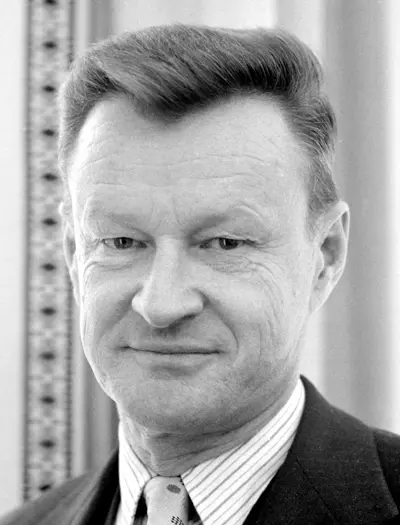
Zbigniew Kazimierz Brzezinski was a Polish-American diplomat and political scientist. He served as a counselor to President Lyndon B. Johnson from 1966 to 1968 and was President Jimmy Carter's National Security Advisor from 1977 to 1981. As a scholar, Brzezinski belonged to the realist school of international relations, standing in the geopolitical tradition of Halford Mackinder and Nicholas J. Spykman. Brzezinski was the primary organizer of The Trilateral Commission.
